gracezhang@yijiecool.com
 English
 Español
 عربى
عربى


Air-Cooled Chiller System Basics, Selection Guidance, and Long-Term Reliability Tips
Content
A facility manager in a hot climate starts seeing high condensing pressure on a chiller midway through summer. The first question is usually whether the air cooled chiller system was the right choice, and the second is how to keep it reliable. In most industrial and commercial projects, an air cooled chiller system is selected not because it beats a water-cooled unit on every metric, but because it removes the cooling tower, makeup water, and water-treatment duties from the site. The trade-off is simple in principle: higher condensing temperature and more fan energy versus lower site complexity and maintenance requirements.
How an Air-Cooled Chiller System Works
An air-cooled chiller system rejects heat from the refrigeration circuit directly to ambient air. It uses air-cooled condenser coils, refrigerant, compressor, expansion valve, and an evaporator that chills water or glycol. The following six steps describe the operating principle.
The Six-Step Refrigeration Cycle
- The compressor raises low-pressure refrigerant vapor to a high pressure and high temperature.
- Hot vapor flows into the condenser coil, where fans pull outdoor air across finned aluminum or copper tubes.
- As heat is rejected, the vapor condenses into a high-pressure liquid.
- The expansion valve reduces the pressure and temperature of the liquid refrigerant.
- Low-temperature refrigerant then enters the evaporator and absorbs heat from the chilled-water loop.
- The refrigerant leaves the evaporator as a low-pressure vapor and returns to the compressor.
Condenser and evaporator performance has an outsized effect on chiller efficiency and compressor life. A dirty coil, undersized fan, or poorly selected heat exchanger will raise pressure ratios and shorten component life.
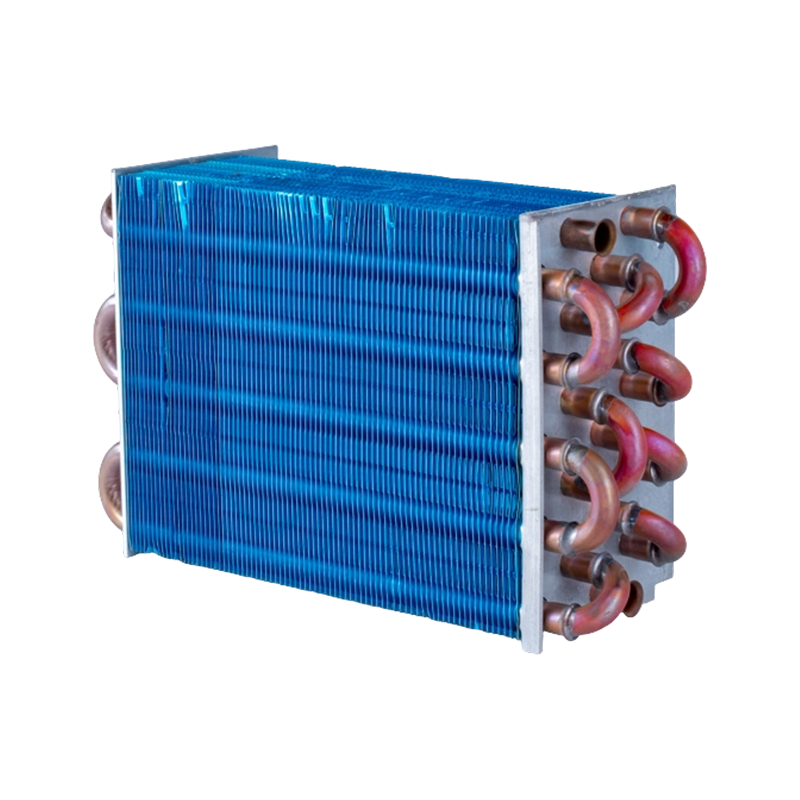 Compact Copper-Core Outdoor AC Condenser with Hydrophilic Louvered FinsThis outdoor condenser features a compact core and corrosion-resistant galvanized sheet metal, making it a practical choice when coil performance directly affects chiller efficiency and compressor life.View Product →
Air-Cooled vs. Water-Cooled: A Practical Comparison
Engineers often compare air-cooled and water-cooled systems by focusing only on energy efficiency. The full picture depends on water availability, space, noise, maintenance skills, and first cost.
| Criterion | Air-cooled | Water-cooled |
|---|---|---|
| Condensing medium | Ambient air | Water from a cooling tower |
| Water consumption | None for heat rejection | Evaporation and blowdown losses |
| Space and access | Outdoor roof or yard with clear airflow | Indoor chiller plus tower footprint |
| Noise | Fan and compressor noise at the condenser | Fan noise at tower plus pump noise |
| Efficiency | Higher condensing temperature, lower full-load efficiency | Lower condensing temperature, higher efficiency |
| Maintenance | Coil cleaning, fan motor checks, refrigerant checks | Water treatment, tower fill, pump seals, tube cleaning |
| First cost | Usually lower for moderate capacities | Usually higher with tower and pumps |
An air cooled chiller system often becomes the default choice in buildings without a dedicated cooling tower, in freeze-prone climates, or when the maintenance team cannot manage water chemistry. Water-cooled systems can deliver better full-load efficiency, but that advantage depends on continuous condenser water treatment and proper tower maintenance. The project data should decide, not a generic preference.
Selection Criteria That Matter for Real Projects
Choosing the right air-cooled chiller system requires more than a published capacity number. The installed performance depends on site conditions, part-load profiles, and the heat exchanger design.
Ambient Temperature and Design Conditions
Condenser capacity varies with outdoor dry-bulb temperature. Specify the system for the highest expected ambient condition, not the annual average. In high-temperature regions, a slightly larger condenser area reduces condensing pressure and keeps compressor power in check.
Part-Load Behavior
Most chillers run at partial load for most of the year. Multiple fans staged in sequence, variable-speed fans, and a properly matched expansion valve all improve partial-load efficiency. Ask the supplier for IPLV or NPLV data rather than a single full-load EER number.
Space Constraints and Airflow
An air-cooled condenser needs unobstructed airflow on the inlet and outlet sides. Recirculation of hot discharge air will reduce capacity and increase condensing pressure. For tight mechanical rooms or rooftop layouts, a compact heat exchanger may be necessary to fit the airflow path.
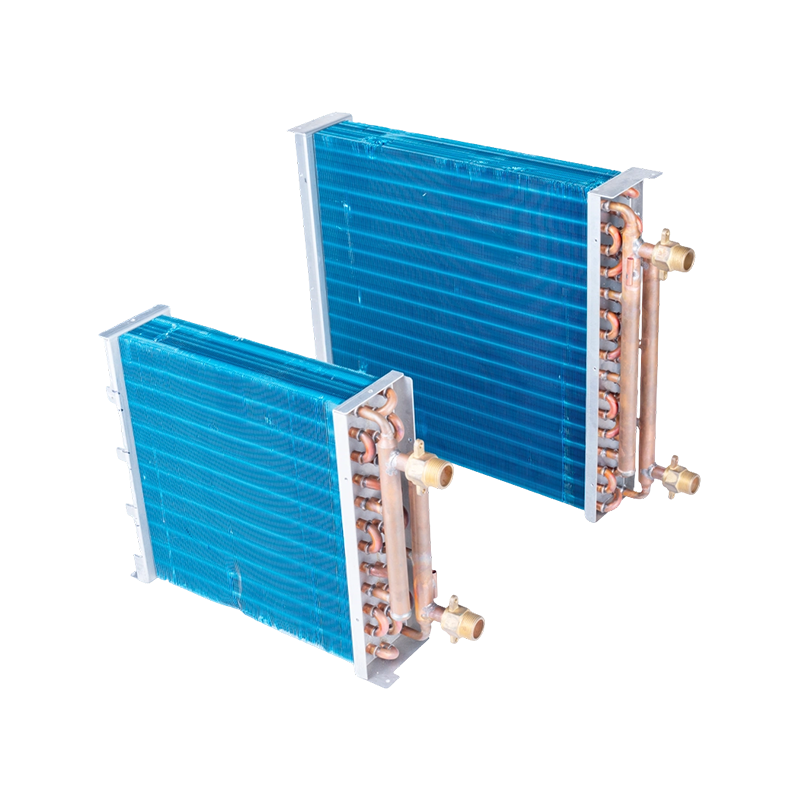
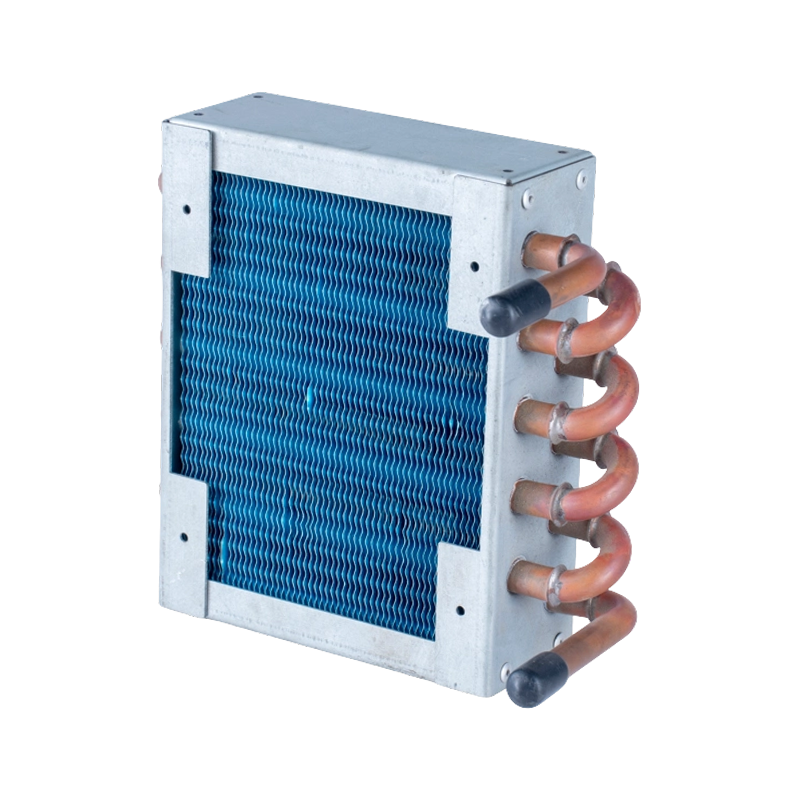 Compact Copper Condenser with Corrugated Hydrophilic Fins for Tight SpacesDesigned for small refrigeration systems and tight mechanical rooms, this condenser's slim profile and efficient heat transfer help maintain proper airflow and reduce condensing pressure.View Product →
Fluid Selection and Freeze Protection
For chilled water loops exposed to low ambient temperatures, use the correct percentage of inhibited glycol. The evaporator pressure drop and heat-transfer characteristics change with the fluid, so the chiller performance should be calculated for the actual fluid mixture.
Component Quality and Long-Term Reliability
The most expensive repair in a chiller plant is often the one caused by a failing heat exchanger. Corrosion pitting, tube-to-fin bond failure, and pressure-cycle fatigue can occur after years of operation. A reliable air-cooled chiller system depends on condenser and evaporator core quality as much as the compressor brand.
An OEM heat exchanger supplier can match material, fin spacing, and construction to the duty. Aluminum tube construction has gained ground because it reduces weight and material cost while providing service life comparable to copper when the coil is properly coated and protected. Copper remains useful for certain condensing units, high-temperature applications, and sites with aggressive air chemistry.
Ask the heat exchanger supplier for specific verification data: salt-spray test hours, pressure-cycle counts, wall thickness, and burst pressure. The difference between a condenser that survives ten years and one that fails after three is often hidden in those numbers.
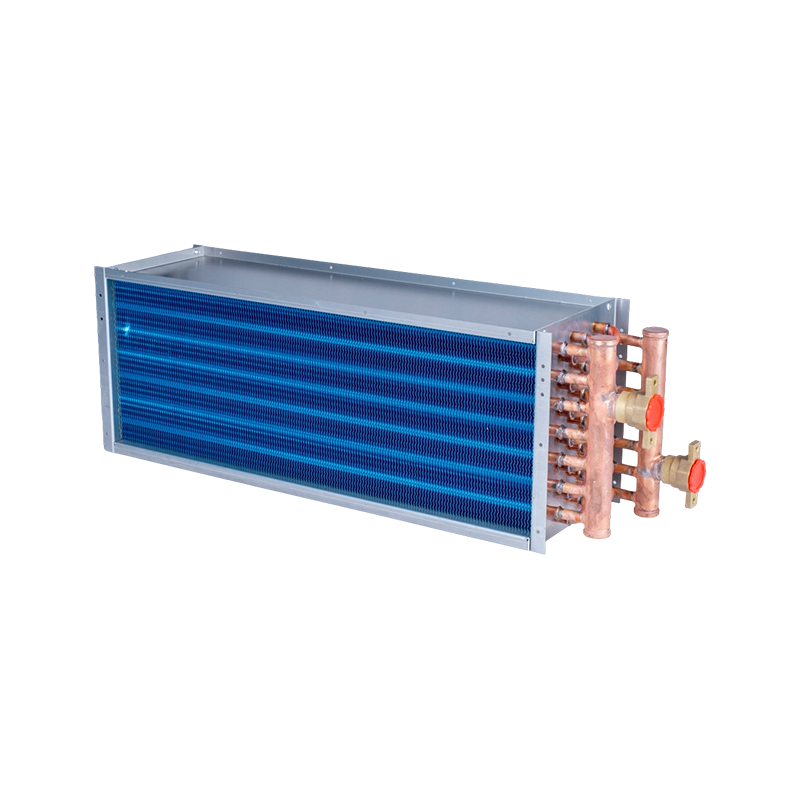
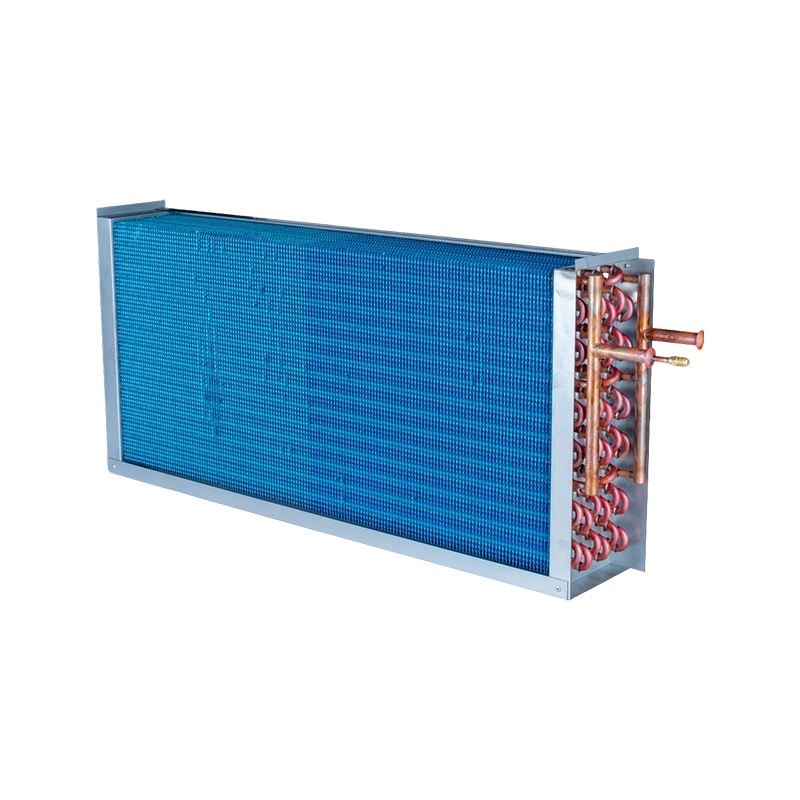 Large Commercial Evaporator with Copper Core and Aluminum HousingWith a sizable core and fast cooling capability, this evaporator suits demanding commercial refrigeration. Its construction details are relevant when verifying durability against salt-spray and pressure-cycle expectations.View Product →
Installation and Maintenance Considerations
An air-cooled chiller system is not a disconnect-and-forget machine. Installation quality has a direct effect on annual energy cost and service frequency.
Clearances and Air Recirculation
Leave at least the clearance recommended by the manufacturer between the condenser and walls, other units, or parapets. If multiple air-cooled chillers are side by side, prevent the discharge of one unit from entering the inlet of another.
Coil Cleaning Schedule
Dust, leaves, and pollen accumulate on condenser fins. The pressure drop across the coil rises, condensing temperature increases, and compressor power climbs. In urban or agricultural environments, inspect coils monthly during peak season. Use low-pressure water from the inside out to avoid bending the fins.
Refrigerant Charge and Superheat
An undercharged system loses capacity; an overcharged system can cause elevated discharge pressure. Verify subcooling and superheat during seasonal commissioning rather than adding refrigerant based only on pressure.
Maintenance tasks are easier when the heat exchanger design includes accessible headers, cleanable tubes, and standard connection sizes. A chiller that is difficult to clean will not be cleaned as often as it should be.
For a broader look at heat exchanger types and maintenance, see our HVAC heat exchanger guide.
The Bottom Line for Air-Cooled Chiller Selection
An air cooled chiller system can be the right choice when the project prioritizes low site complexity, no condenser water, and predictable maintenance. The actual result depends on ambient design conditions, part-load controls, installation clearances, and the quality of the heat exchanger cores.
When the condenser and evaporator are customized for the refrigerant, flow rate, and environmental loads, the chiller is more likely to meet its expected energy performance and service life. Review the OEM heat exchanger options before committing to a standard packaged unit.