Industry knowledge
Why Aluminum Tube Heat Exchangers Perform Better in High-Humidity Environments
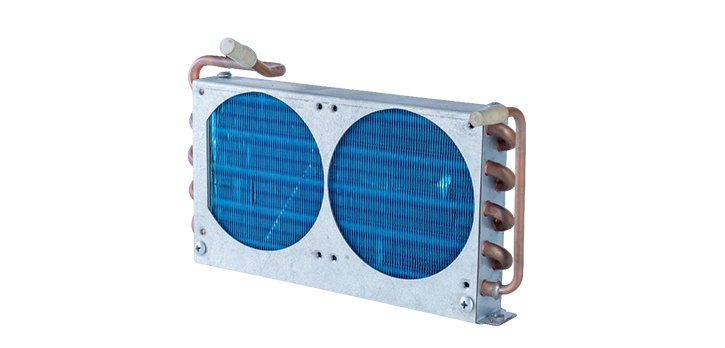
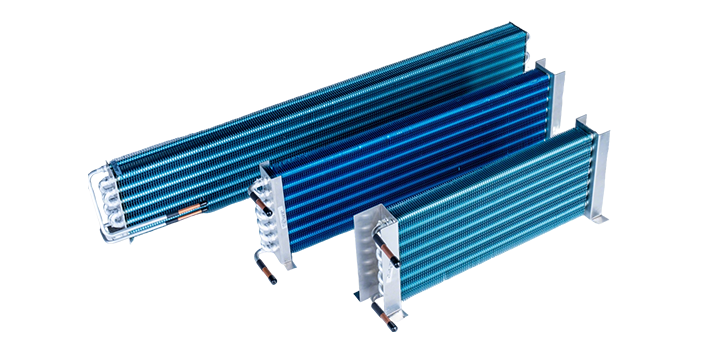
In humid operating conditions, corrosion resistance is often more important than initial cooling capacity. An Aluminum Tube Evaporator and Aluminum Tube Condenser with optimized alloy composition and surface treatment can maintain stable heat transfer efficiency for much longer than conventional solutions. Instead of focusing only on thermal conductivity, engineers increasingly evaluate how the entire heat exchanger performs after years of exposure to moisture, condensation, and airborne contaminants.
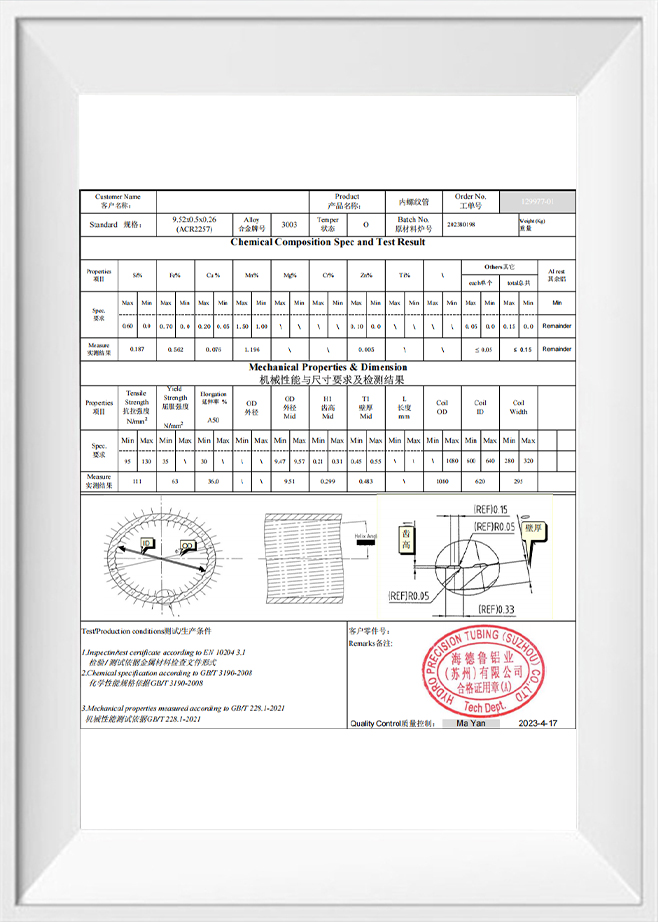
Hangzhou Yijie Refrigeration Technology Co., Ltd. has accumulated 12 years of expertise in heat exchanger manufacturing and developed multiple core technologies around high-performance aluminum tube solutions. By replacing traditional copper materials with advanced aluminum tube technology, the company reduces material costs by more than 30% while making large-scale manufacturing more efficient. Every product is validated through 500-hour standard salt spray testing and 50,000 pressure cycle verification, ensuring corrosion resistance and compressive strength that exceed national standards in demanding applications.
- Aluminum oxide naturally forms a protective barrier that slows further corrosion.
- Stable tube geometry helps maintain refrigerant flow even after prolonged operation.
- Improved resistance to condensate minimizes long-term performance degradation.
- Lower structural weight reduces stress on supporting components during installation.
Tube Geometry Has a Greater Impact Than Many Designers Expect
Modern heat exchanger efficiency depends not only on material selection but also on tube geometry. Internal channel dimensions influence refrigerant velocity, pressure loss, oil return characteristics, and heat distribution across the entire coil. Even small dimensional adjustments can noticeably improve system efficiency while reducing compressor workload.
| Design Factor |
Practical Benefit |
| Micro-channel distribution |
More uniform refrigerant flow |
| Optimized hydraulic diameter |
Reduced pressure drop |
| Balanced tube spacing |
Improved airflow utilization |
| Precision expansion process |
Reliable tube-fin bonding |
Mechanical Durability Is Becoming a Key Purchasing Criterion
Commercial buyers increasingly evaluate lifecycle reliability rather than simply comparing cooling capacity. Repeated thermal expansion, vibration during transportation, and continuous refrigerant pressure fluctuations gradually weaken conventional heat exchangers. Products capable of maintaining structural stability under cyclic loading provide lower maintenance costs and longer replacement intervals.
This is one reason why Hangzhou Yijie Refrigeration Technology Co., Ltd. performs 50,000 pressure cycle verification on its aluminum tube heat exchangers. Combined with extensive corrosion testing, these validation procedures provide practical confidence for equipment manufacturers developing systems intended for continuous operation in residential, commercial, and industrial environments.
Customization Should Match the Entire Refrigeration System
Selecting an evaporator or condenser based only on dimensions often leads to inefficient system integration. Engineers should evaluate refrigerant type, airflow characteristics, compressor capacity, operating temperature range, installation space, and maintenance accessibility simultaneously. A customized heat exchanger can significantly improve energy efficiency without requiring major redesigns of other components.
Leveraging strong customization capabilities, Hangzhou Yijie Refrigeration Technology Co., Ltd. develops aluminum tube heat exchangers for household air conditioners, automotive air conditioning systems, dehumidifiers, cold chain equipment, environmentally friendly machinery, server rooms, warehouses, and numerous other applications. This flexibility allows manufacturers to optimize thermal performance while maintaining production efficiency and competitive costs.
Future Heat Exchanger Development Focuses on Efficiency and Sustainable Manufacturing
As energy efficiency regulations continue to tighten worldwide, manufacturers are shifting attention from simply increasing cooling capacity to improving total system performance. Lightweight aluminum tube technology supports this transition by reducing raw material consumption, lowering transportation costs, and simplifying automated production processes. The result is not only a more economical Aluminum Tube Evaporator and Aluminum Tube Condenser, but also a solution better suited for modern sustainable manufacturing goals.
With more than a decade of dedicated research in heat exchangers, Hangzhou Yijie Refrigeration Technology Co., Ltd. continues to combine advanced aluminum tube technology, proven durability testing, and scalable manufacturing capabilities. By integrating material innovation with application-specific customization, the company supports equipment manufacturers seeking reliable thermal management solutions across increasingly diverse refrigeration and air conditioning industries.

 English
 Español
 عربى
عربى