gracezhang@yijiecool.com |
 English
 Español
 عربى



Condensor vs Condenser: Which Spelling Is Correct and What the Part Does
Content
- 1 Condensor vs Condenser: The Short Answer
- 2 What a Condenser Does, and Why the Term Appears Everywhere
- 3 Where the Two Spellings Show Up in Real Documents
- 4 Condenser Configurations You Will Actually Specify
- 5 The Selection Numbers That Decide Whether the Coil Works
- 6 Copper Tube or Aluminum Tube: What the Change Costs and Saves
- 7 A Practical Checklist Before You Release the Purchase Order
Search a supplier catalog for the part you need, spelled the way it is often pronounced — "condensor" — and watch the result count fall. Only one of the two spellings is correct. Condenser is the standard English term for the heat-rejecting coil used in air conditioning, refrigeration, and automotive thermal systems. "Condensor" is a misspelling, and while search engines usually guess what you meant, procurement platforms, drawing title blocks, and ERP part-number fields frequently do not.
That matters more than an ordinary spelling argument would, because a condenser specification passes through many hands: an RFQ written by a maintenance technician, a drawing issued by a design engineer, a line item created by a buyer, and a data sheet produced by the coil manufacturer. Getting the word right at the start keeps the whole chain searchable, quoteable, and auditable.
Condensor vs Condenser: The Short Answer
The correct spelling is condenser. "Condensor" does not appear as an accepted variant in standard dictionaries; it shows up in older patents, machine-translated documents, shorthand notes, and informal email, but it is an error rather than an alternative.
The confusion is understandable. In speech, the final syllable is unstressed and can sound like either "er" or "or" depending on the speaker's accent, so both spellings feel plausible on paper. English also contains plenty of technical nouns that genuinely end in -or: compressor, evaporator, resistor, radiator, accumulator. Condenser happens to end in -er, built from the Latin verb condensare ("to make dense") plus the agent suffix -er.
There is a second trap. Refrigeration vocabulary places both endings side by side — evaporator and condenser — so people who write "evaporator" all day sometimes carry the -or pattern across out of habit.
- Search engines: tolerant. A query for "condensor" is usually corrected automatically.
- Internal systems: intolerant. ERP and PDM searches often run exact matches, so a BOM line spelled "condensor" can effectively hide a part from every later search.
- Cross-border documents: mixed. Translated catalogs and legacy drawings may use either form, so when comparing two suppliers, confirm you are comparing the same component and not just the same word.
What a Condenser Does, and Why the Term Appears Everywhere
Once the spelling question is settled, the engineering question is what the component is doing in the circuit. A condenser rejects the heat the evaporator absorbed, plus the heat added by compression. Refrigerant arrives from the compressor as a high-pressure, high-temperature vapor and leaves as a high-pressure liquid, ready to be metered through an expansion device.
Inside the coil there are really three zones working in sequence: desuperheating, where vapor is cooled down to saturation; condensing, where the phase change happens at nearly constant temperature; and subcooling, where the liquid is cooled below saturation to protect the expansion valve from flash gas.
Two service numbers reveal a great deal. Condensing temperature is normally ambient plus an approach of roughly 8 to 15 K for air-cooled coils. Liquid subcooling typically runs 5 to 8 K. If subcooling collapses while condensing pressure climbs, the coil is undersized, fouled, or starved of airflow — not misspelled.
Where the Two Spellings Show Up in Real Documents
In day-to-day purchasing, the spelling question is rarely about grammar. It is about whether a document can be found again six months later.
| Document or context | Wording you may see | What to check before acting |
|---|---|---|
| RFQ or drawing title block | "Condensor, air cooled" | Confirm the callout on the drawing itself, then quote the dimensioned coil |
| ERP or BOM line item | "CONDENSOR-045" | Search both spellings; exact-match fields will not link the two |
| Performance data sheet | "Condensing capacity (kW)" | Capacity means total heat rejection, not compressor power input |
| Maintenance email | "need a condensor for the freezer" | Ask for refrigerant, duty, connection sizes, and mounting envelope |
| Spare-parts catalog | "condensor assy" | Verify the part number rather than the description text |
| Historic patent or archive | "condensor" | Treat as period usage, not as a current standard term |
Condenser Configurations You Will Actually Specify
Most condensers fall into a few families, and the family determines which numbers matter. Air-cooled fin-and-tube coils dominate refrigeration, residential air conditioning, and light commercial equipment because they need no water supply. Water-cooled and shell-and-tube designs appear in chillers and industrial plants where water is available and footprint is tight. Brazed microchannel and parallel-flow aluminum coils dominate automotive air conditioning because they are compact, light, and hold up under high discharge pressures.
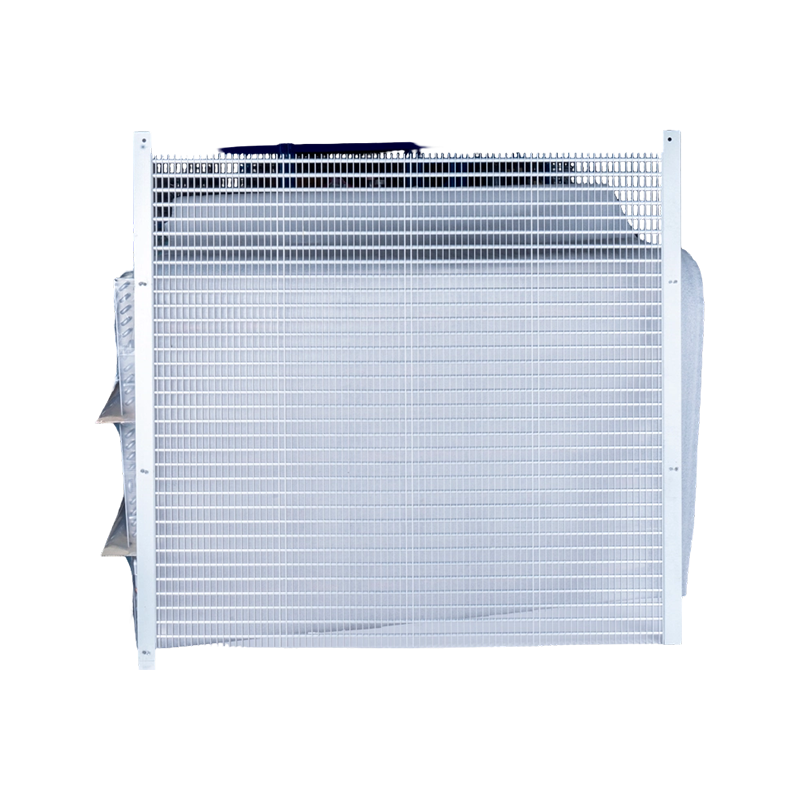
Automotive condensers live in a harsher environment than most. They see road salt, stone impact, vibration, and pressures that push well beyond typical stationary refrigeration duty. Parallel-flow aluminum construction with brazed headers is common, and coating choices matter more than a small difference in nominal capacity.
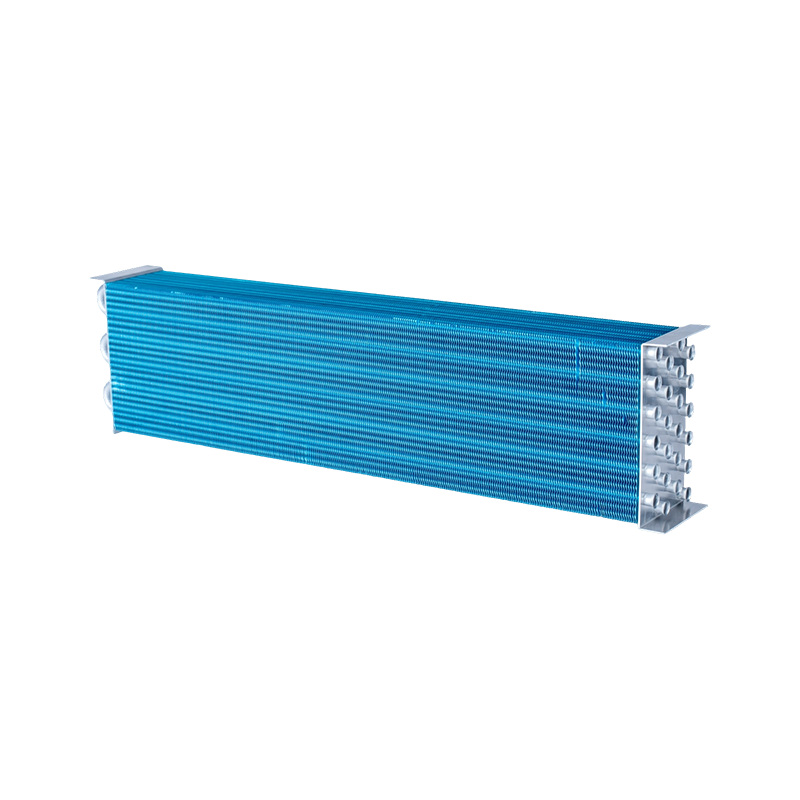 Aluminum-Tube Automotive Condenser for New Energy VehiclesFor automotive cooling in demanding conditions, this all-aluminum condenser uses hydrophilic corrugated fins and suits new energy vehicles while reducing weight and material cost.View Product →
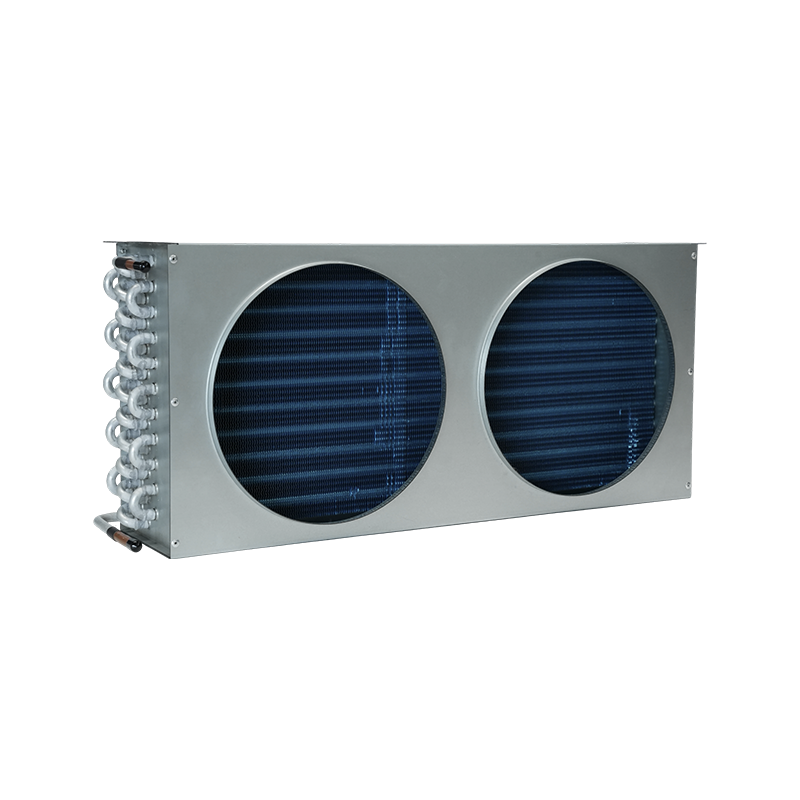
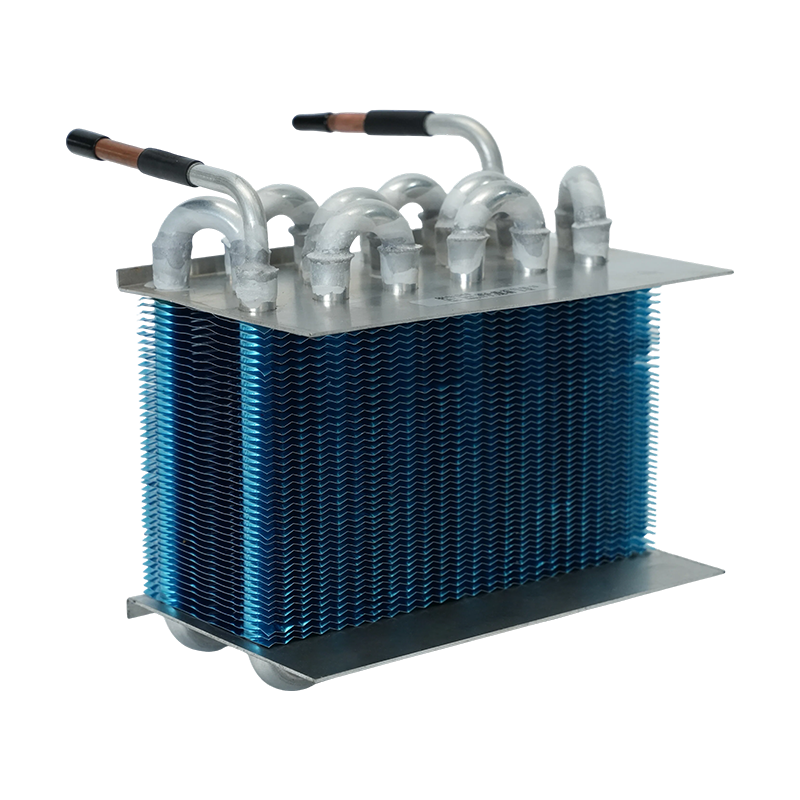
Freezer and cold-room condensers face a different set of problems. Cabinet and cold-store units run long duty cycles in humid air, so coil finish, fin spacing, and drainage paths around the coil determine how quickly frost and dust degrade performance.
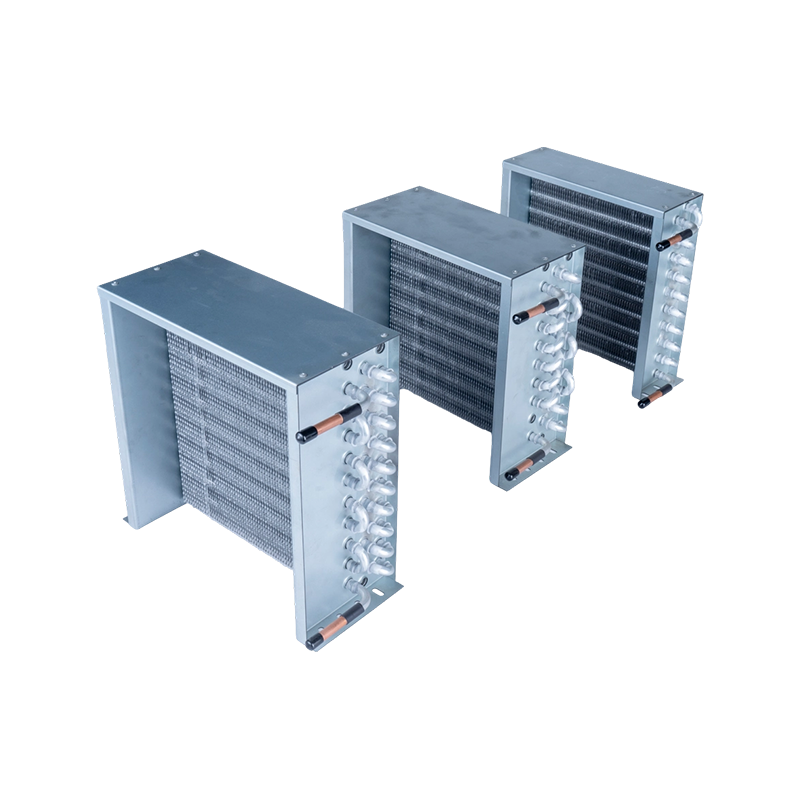 Aluminum Tube Freezer Condenser for Refrigeration SystemsFor freezer and cold-room duty in humid air, this compact aluminum condenser uses wide fin spacing and copper-aluminum welded piping for drainage and leak resistance.View Product →
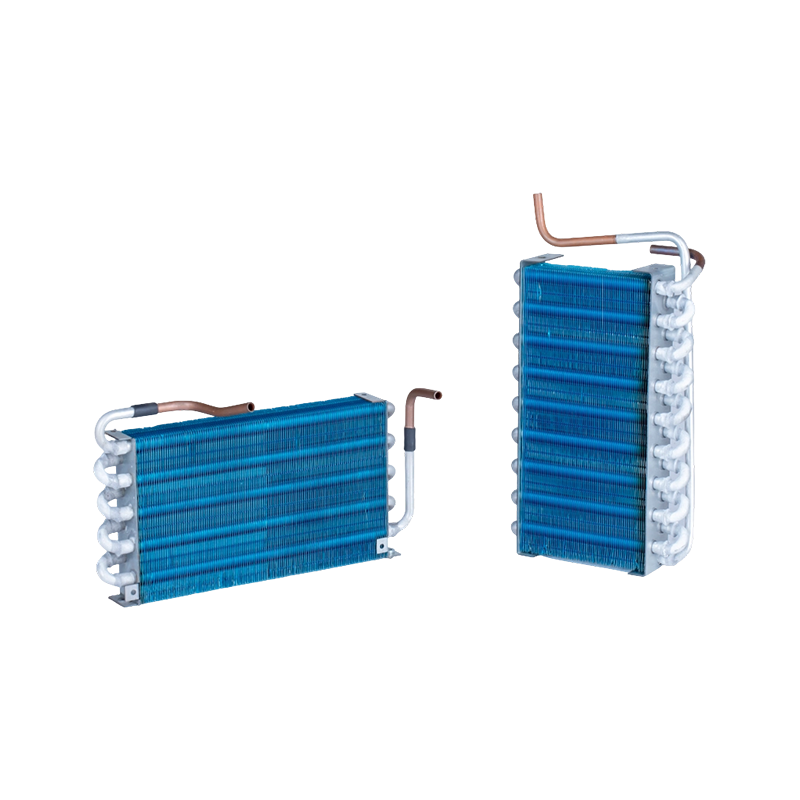
When the installation space is the hard constraint rather than the duty, compact condensers give designers a way to fit the required heat rejection into a fixed cabinet or enclosure volume.
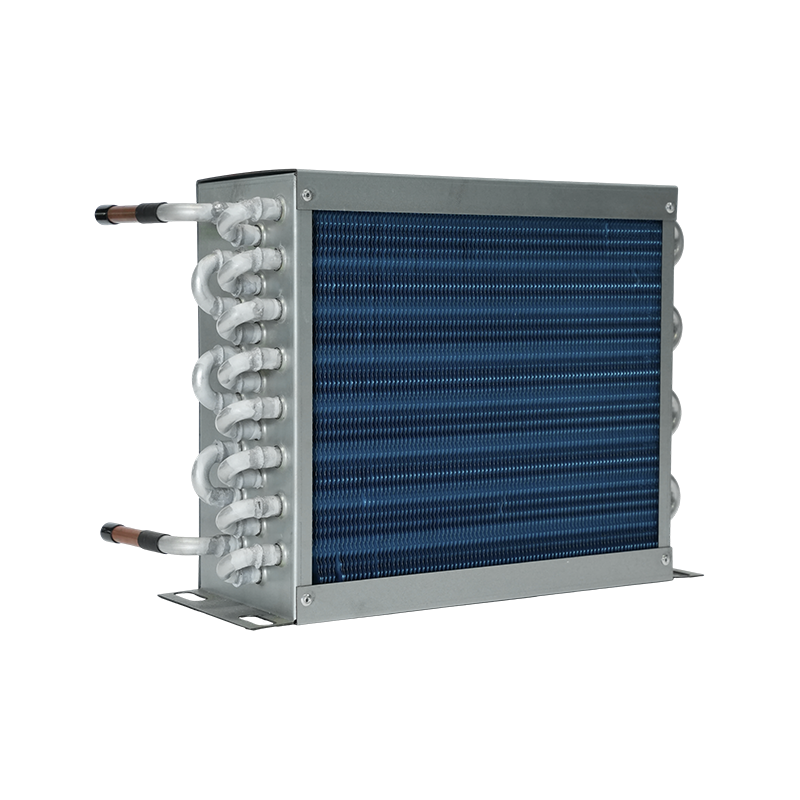 Compact Condenser for Small-Scale Refrigeration and HVACWhen enclosure space is limited, this compact condenser combines a copper core with galvanized steel and hydrophilic fins for efficient cooling in small refrigeration systems.View Product →
The Selection Numbers That Decide Whether the Coil Works
Almost every condenser failure traced back to a specification review comes down to one of a short list of omissions. Confirm each item before releasing an order.
- Heat rejection duty (kW) at the design ambient, not at a nominal condition.
- Refrigerant and design pressure, including the maximum discharge pressure and the test pressure used for verification.
- Approach temperature, normally 8 to 15 K for air-cooled coils; a tighter approach means a physically larger coil.
- Liquid subcooling target, usually 5 to 8 K, to keep the expansion device stable.
- Tube and fin material, wall thickness, and fin density, since fin pitch drives both heat transfer and fouling rate.
- Corrosion protection, expressed as coating type plus a documented salt-spray duration rather than a marketing phrase.
- Pressure cycling, stated as the number of cycles and the pressure swing used in the test.
- Connections and orientation, including inlet and outlet sizes, routing direction, and whether the coil is serviced in place.
- Dimensional tolerances, typically ±2 mm on the mounting envelope and ±5 percent on rated capacity, agreed in writing.
Buyers who want the wider context on coil types, efficiency, and upkeep can read this HVAC heat exchanger guide before writing the specification.
Copper Tube or Aluminum Tube: What the Change Costs and Saves
Material choice is the decision that most often reshapes a condenser project, and it is also where claims need the closest reading. Aluminum tube coils are widely promoted as a route to lower material cost, lighter weight, and better resistance to the price swings that affect copper. Manufacturers in this segment commonly report material cost reductions above 30 percent for aluminum tube construction, along with the ability to scale into high-volume production.
Aluminum is not a free upgrade. It requires different brazing practice, careful joint design, and often a coating strategy to survive coastal or road-salt exposure. Copper remains easier to field-repair, which matters for equipment that is serviced on site rather than replaced. The right answer usually comes from the duty cycle: a sealed, factory-charged unit tolerates aluminum well, while a heavily serviced refrigeration system may still justify copper.
Where durability claims are made, ask for the test conditions rather than the headline number. A salt-spray result is only meaningful alongside the hours of exposure, the standard followed, and the coating applied. A pressure-cycle figure means little without the pressure range and the leak criterion used to judge a failure. Suppliers with genuine in-house testing can normally answer both questions in one email.
A Practical Checklist Before You Release the Purchase Order
- Write "condenser" in the specification, the RFQ, and the BOM, so the part stays searchable later.
- Attach a dimensioned drawing rather than describing the coil in text.
- State the refrigerant, design pressure, and required subcooling.
- Ask for the heat rejection curve at the actual design ambient, not a single nominal point.
- Request corrosion and pressure-cycle test reports with the test conditions included.
- Agree on inspection criteria: leak test method, allowable leak rate, and dimensional tolerances.
- Confirm connection sizes, flow direction, and service access before tooling starts.
- Fix the sample approval step and the production lead time in the contract.
To summarize the original question: "condensor" is a misspelling, "condenser" is correct, and the difference only matters in the places where machines match text exactly — part numbering, document search, and supplier records. The technical term behind the word is what deserves the real attention, because a condenser is specified by its heat rejection duty, its approach temperature, its material and coating, and the test data behind its durability claims.
For design teams comparing aluminum tube options against traditional copper construction, it helps to work from a supplier's actual component list rather than a generic curve. You can review the full range in the product catalog PDF, which covers automotive, household, outdoor air conditioning, freezer and refrigeration, and custom enclosure coils built to drawing.