gracezhang@yijiecool.com |
 English
 Español
 عربى



Evaporator Coils Explained: Working Principle, Types, Materials, and Selection
Content
- 1 What an Evaporator Actually Does
- 2 Evaporator Types and Where They Fit
- 3 Why Tube Material and Coil Design Change the Outcome
- 4 Selection Checklist: Matching the Coil to the Equipment
- 5 Common Field Problems and What They Tell You
- 6 Quality Checks Before a Bulk Order
- 7 Working With a Custom Evaporator Manufacturer
A technician arrives at a site where the supply air is warm, the compressor runs continuously, and someone has already added refrigerant. The real problem is often not charge level but the evaporator: a coil that is starved, flooded, fouled, badly matched to airflow, or corroded enough to lose heat transfer. Before changing parts, confirm whether the coil is absorbing heat as intended. If you have seen the spelling evaporater, it is a common misspelling of evaporator.
The short answer is that an evaporator is a heat exchanger where low-pressure liquid refrigerant boils and absorbs heat from air, water, or a product. Its performance depends on surface area, refrigerant distribution, airflow, tube material, fin geometry, cleanliness, and operating conditions. A coil that looks correct on a drawing can still fail in service if those details are not matched to the system.
What an Evaporator Actually Does
In a direct-expansion circuit, liquid refrigerant enters the coil through a distributor and small tubes. As pressure drops, the refrigerant reaches a lower saturation temperature than the air or product it is cooling. Heat moves from the warmer medium into the refrigerant, and the refrigerant boils into vapor. The coil does not create cold; it moves heat from one place to another.
Two measurements matter. First, refrigerant-side superheat tells you whether the coil is receiving enough liquid without letting liquid reach the compressor. Second, air-side temperature difference and pressure drop tell you whether the coil is getting the airflow it was designed for. A dirty filter, a collapsed duct, or a fan set too slow can make a good coil behave like an undersized one. Moisture also matters: when air passes over a cold surface below dew point, condensate forms, so drain pans, slopes, and drainage paths are part of evaporator performance, not accessories.
Evaporator Types and Where They Fit
Most air-conditioning and refrigeration evaporators are forced-air, direct-expansion coils. Industrial flooded coils use a different refrigerant feed strategy and usually require a surge drum or pump. Natural-convection coils rely on gravity and air movement without a fan, which suits some refrigerated cabinets and compact appliances. Automotive cabin evaporators prioritize compact size, vibration resistance, and drainage in tight spaces. Large commercial evaporators for cold rooms and supermarkets prioritize service access, defrost performance, and corrosion resistance.
| Configuration | Typical use | Design priority | Common risk |
|---|---|---|---|
| Direct-expansion forced-air coil | AC units, dehumidifiers, display cases | Superheat control and even circuit feeding | Frosting from low airflow or overfeeding |
| Automotive evaporator | Passenger cars, trucks, parking coolers | Compact packaging and vibration resistance | Drain blockage and poor air-side sealing |
| Large commercial evaporator | Cold rooms, warehouses, supermarket refrigeration | Defrost, service access, and corrosion protection | Ice buildup and long defrost recovery time |
| Natural-convection coil | Compact cabinets and small appliances | Surface area and passive airflow | Low capacity when ambient conditions change |
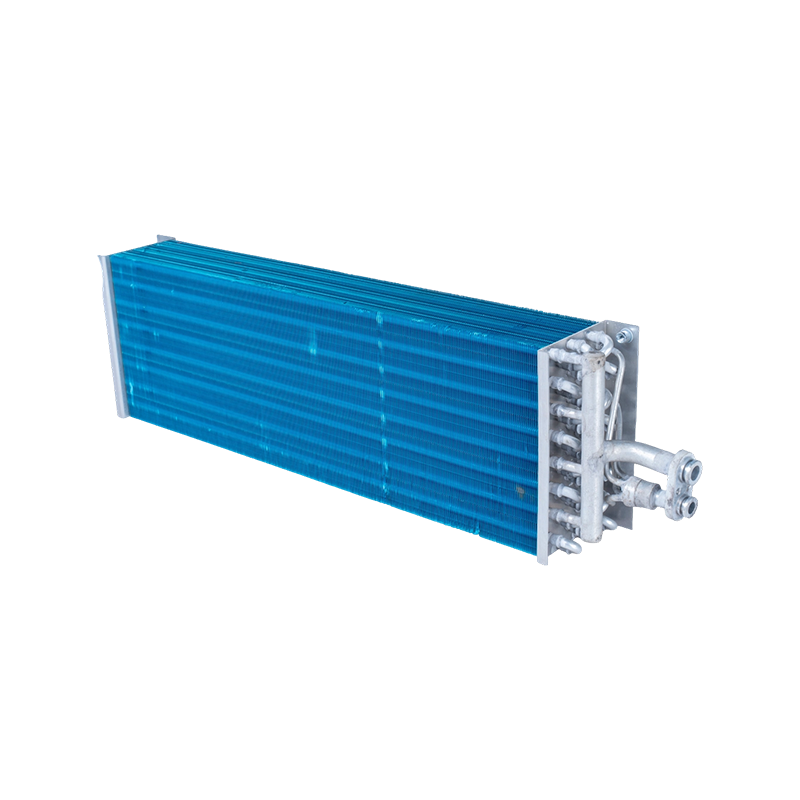
For automotive programs, the coil must fit a defined package envelope while holding capacity across vibration, road salt, and repeated thermal cycling. A precision aluminum-tube automotive evaporator is a practical reference point for that kind of constrained design.
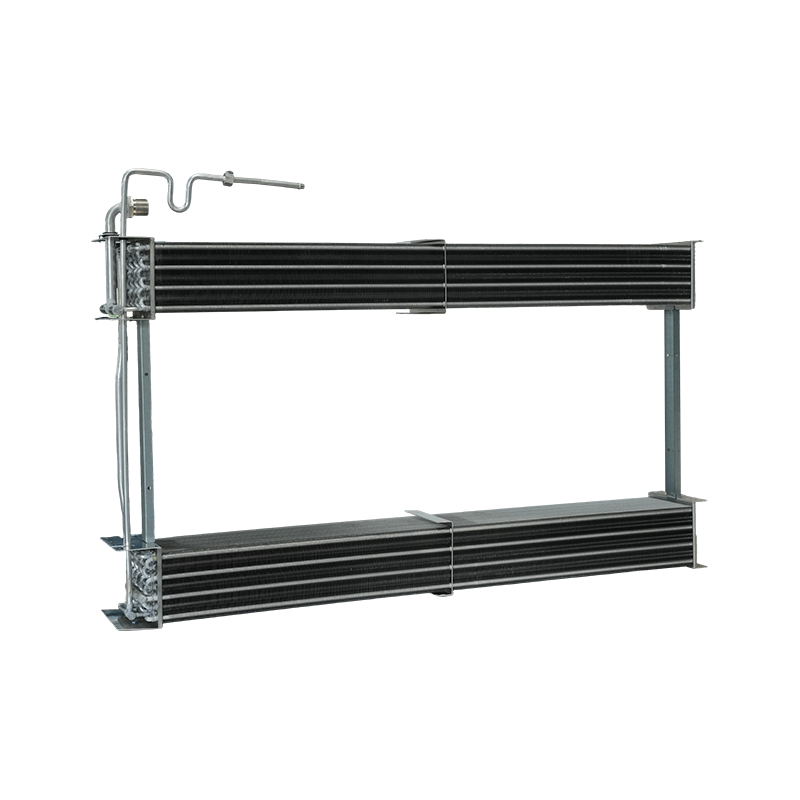 Precision Aluminum-Tube Automotive Air-Conditioning EvaporatorCompact all-aluminum automotive evaporator with corrugated fins, customizable platforms, and salt-spray and pressure-cycle validation for constrained vehicle HVAC designs.View Product →
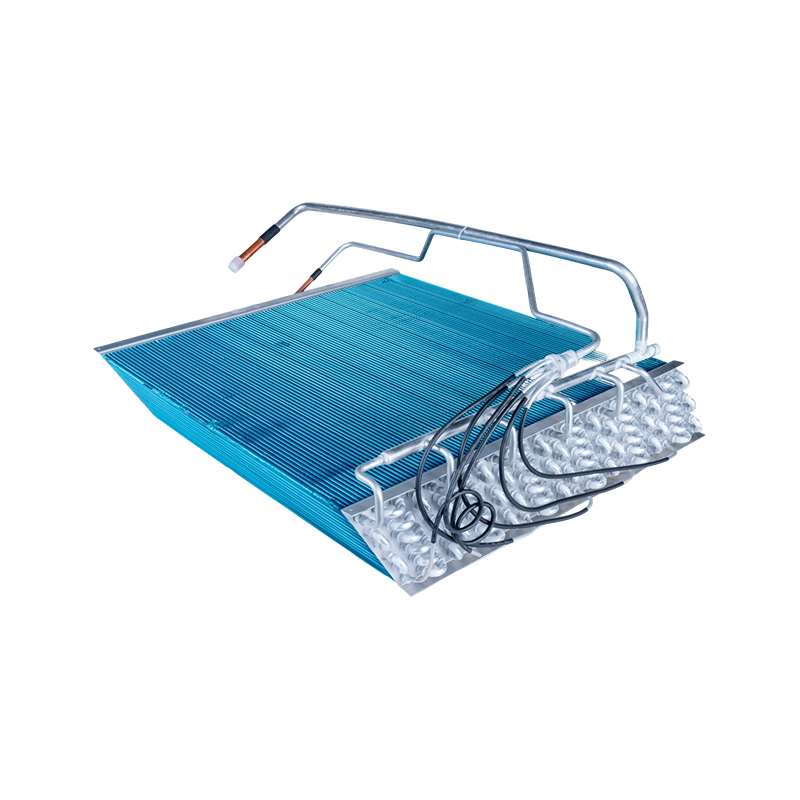
In refrigeration, a large commercial evaporator must be selected with defrost strategy, aisle clearance, fan power, and coil cleaning in mind. The lowest first cost is rarely the lowest lifecycle cost if service access is poor.
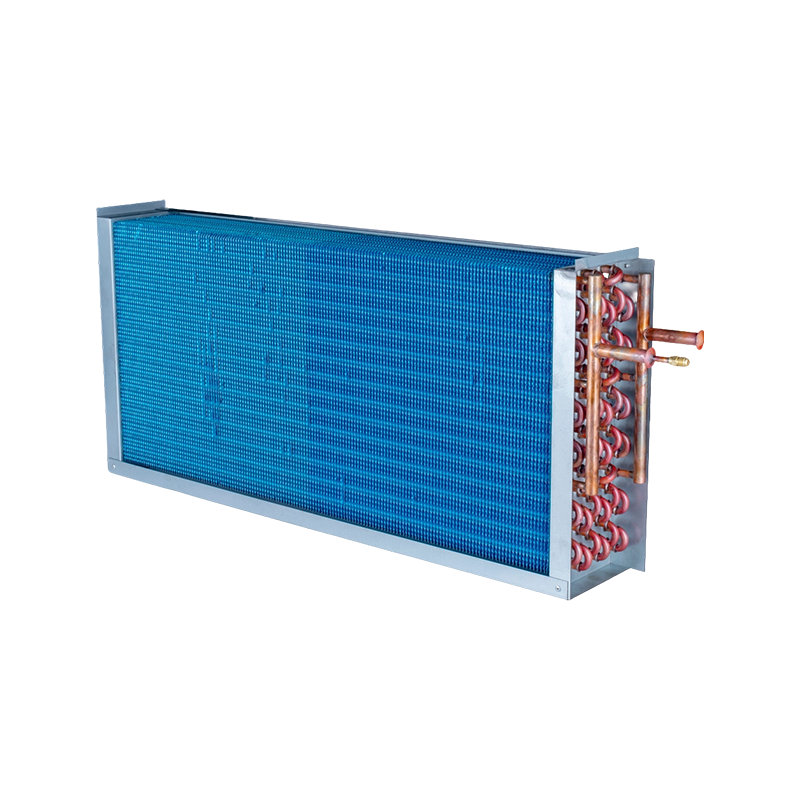 Large Commercial Refrigeration Evaporator for Display CabinetsAll-copper core and hydrophilic aluminum fins support rapid cooling and drainage; consider service access and defrost strategy when selecting this commercial evaporator.View Product →
Why Tube Material and Coil Design Change the Outcome
Copper has excellent thermal conductivity and is familiar to service technicians. Aluminum is lighter and usually lower in material cost, but it needs careful joint design, surface treatment, and galvanic isolation where it meets other metals. The practical comparison is not simply copper versus aluminum. It is whether the selected coil achieves the required capacity within allowable pressure drop, weight, corrosion exposure, and service life. In coastal, roadside, or washdown environments, salt spray and humidity can matter more than a small difference in laboratory heat transfer.
Circuit design is equally important. A coil with many parallel paths may reduce refrigerant pressure drop but can distribute liquid unevenly if the distributor, headers, and capillary tubes are not matched. Fin pitch affects air-side pressure drop and fouling risk. Tube diameter affects internal volume and oil return. A supplier can offer the same outside dimensions with very different internal performance, so compare rated capacity at stated entering air conditions, refrigerant, superheat, airflow, and allowable pressure drop.
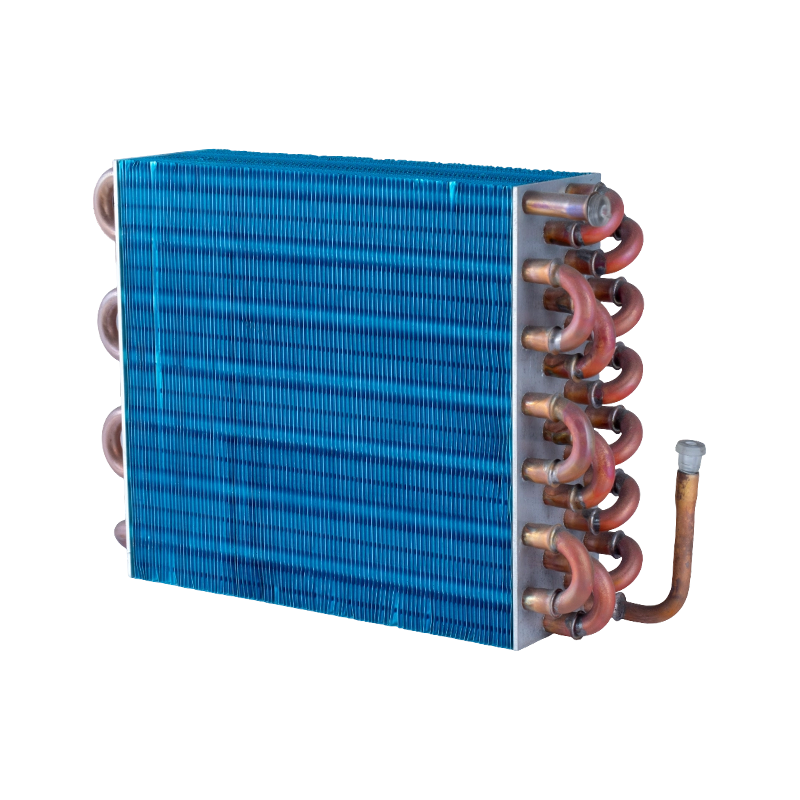
Household and light-commercial equipment often needs a compact coil that fits a dehumidifier, water dispenser, or small heat pump while remaining easy to drain and clean. Those applications reward simple, repeatable brazing, stable fin bonding, and drawings that clearly define connection orientation.
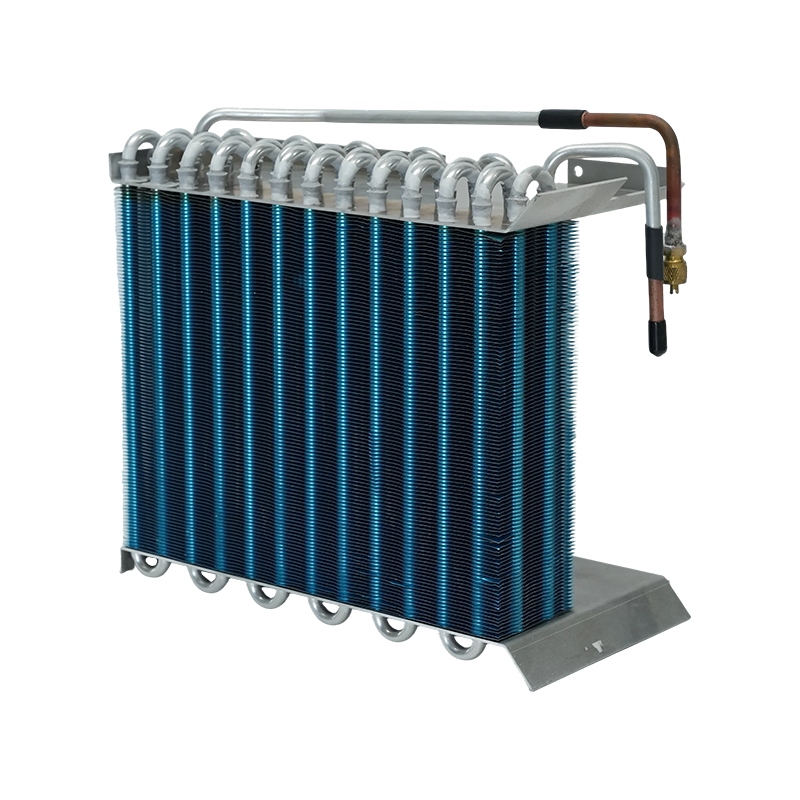 Compact Hydrophilic Aluminum Household EvaporatorCompact household evaporator with hydrophilic aluminum fins, all-copper piping, and aluminum housing; useful reference for efficient HVAC cooling and moisture drainage.View Product →
Material substitution can reduce cost, but verify the claim against your own duty cycle. A supplier may state that aluminum-tube construction lowers material cost by more than 30 percent. That is useful as a starting point, not as a guarantee for every design. Ask for the test conditions, wall thickness, coating, joint method, and expected pressure rating.
Selection Checklist: Matching the Coil to the Equipment
Use a structured specification rather than a picture and a size. The following sequence prevents most procurement surprises:
- Define the cooling duty at realistic entering air and refrigerant conditions, including pull-down and part-load operation.
- State the refrigerant, allowable charge, superheat target, and oil return requirements.
- Provide airflow, external static pressure, and available fan curve, not just nominal cubic feet per minute.
- Set maximum air-side and refrigerant-side pressure drop so the coil does not shift the system outside its design range.
- Confirm envelope dimensions, tube orientation, connection sizes, drain direction, and service clearance.
- Specify materials, coating or surface treatment, and expected corrosion exposure.
- Agree on capacity tolerance, leak test method, pressure test, cleanliness, and packaging protection.
- Require samples or first-article reports before approving a production batch.
For OEM projects, the drawing package should also control fin pitch, tube pattern, header position, brazing alloy, and labels. Small dimensional changes can alter airflow and drainage enough to create field complaints.
Common Field Problems and What They Tell You
Frost that forms in one section of the coil usually points to uneven refrigerant distribution or airflow, not simply low charge. High superheat with a warm coil can indicate a restricted distributor or a starved circuit. Low superheat and sweating suction lines can indicate overfeeding. Ice on the whole coil often follows reduced airflow, a failed defrost cycle, or a fan problem. Corrosion at tube-to-fin joints deserves attention because it raises long-term leak risk, especially in coastal or washdown sites.
Do not diagnose by pressure alone. Record entering and leaving air temperature, airflow, superheat, subcooling, and coil pressure drop together. A coil can pass a leak test and still be the wrong coil for the system. For a broader walkthrough of coil types, efficiency, and maintenance, see this HVAC heat exchanger guide.
Quality Checks Before a Bulk Order
Request test reports that connect the claimed result to a method. A salt spray duration only means something when the standard, concentration, specimen preparation, and acceptance criteria are stated. A pressure-cycle figure is similarly incomplete without pressure range, hold time, cycle rate, and pass criteria. Suppliers may cite 500-hour salt spray and 50,000 pressure cycles; buyers should confirm the report, sample configuration, and whether the test represents the actual coating and joint design being purchased.
Also review leak testing, burst margin, vibration testing, dimensional capability, and packaging. For aluminum coils, check brazing quality and fin-to-tube contact. For any coil, check that caps and connections are sealed against debris during shipping. Batch consistency is a procurement issue, not only a factory issue: a coil that fits the first sample but not the tenth container creates assembly-line downtime.
Working With a Custom Evaporator Manufacturer
A custom OEM relationship should cover more than a price per unit. It should include drawing review, refrigerant circuit simulation or selection support, prototype evaluation, inspection criteria, change control, and repeat-order consistency. Hangzhou Yijie Refrigeration Technology positions itself as a custom heat exchanger supplier and OEM factory with aluminum-tube two-phase heat exchanger experience. Buyers evaluating that route should still test samples against their own performance and durability requirements.
A product catalog can help shortlist coil families before a technical discussion; the company catalog is available for download here: Yijie product catalog.
The practical takeaway is simple: treat the evaporator as a matched system component, not a commodity part. Confirm the duty, airflow, refrigerant feed, material, corrosion exposure, and test method before approving a design. When a coil underperforms, check distribution and airflow before assuming the refrigerant charge is wrong. That approach saves diagnostic time, reduces repeat service calls, and gives procurement teams a defensible basis for comparing samples and production coils.