gracezhang@yijiecool.com |
 English
 Español
 عربى



Compressor vs Condenser: Key Differences, Roles, and Selection Tips for HVAC
Content
- 1 The Short Answer: One Moves Refrigerant, the Other Rejects Heat
- 2 What the Compressor Does in the Refrigeration Cycle
- 3 What the Condenser Does and Why Its Design Is Different
- 4 Side-by-Side Differences That Matter
- 5 How the Two Parts Work Together
- 6 Efficiency, Sizing, and the Cost of a Poor Match
- 7 Maintenance and Troubleshooting: Compressor or Condenser?
- 8 Material and Manufacturing Choices for OEM Buyers
- 9 A Practical Checklist Before You Specify or Replace Either Part
A technician reads 410 psi discharge pressure on an R-410A system, finds a condenser coil packed with lint, and still hears the customer say, “The compressor is bad.” That misdiagnosis is common because both parts sit at the center of the refrigeration cycle and both affect pressure, temperature, and cooling performance. The short answer is simple: the compressor is the pump that moves refrigerant and raises its pressure; the condenser is the heat exchanger that rejects heat from that refrigerant. One consumes most of the electrical power, and the other sets how hard the compressor has to work.
The Short Answer: One Moves Refrigerant, the Other Rejects Heat
In a vapor-compression system, the compressor takes low-pressure vapor from the evaporator and compresses it into high-pressure, high-temperature vapor. The condenser receives that hot vapor and removes heat until the refrigerant condenses into liquid. The compressor changes pressure; the condenser changes state. The compressor has moving parts and consumes shaft work; the condenser has no moving parts of its own, apart from the fans or pumps that move air or water across it.
That difference shapes everything from service diagnosis to procurement. A compressor failure is usually mechanical or electrical: valves, bearings, windings, capacitors, or oil breakdown. A condenser problem is usually thermal or physical: restricted airflow, fouling, bent fins, corrosion, or poor water flow. A condenser cannot pump refrigerant, and a compressor cannot reject heat to the outdoor air.
What the Compressor Does in the Refrigeration Cycle
The compressor draws refrigerant vapor from the evaporator, raises its pressure and temperature, and discharges it toward the condenser. That pressure difference is what allows the evaporator to absorb heat at a low temperature and the condenser to reject heat at a higher temperature. Common types include reciprocating, scroll, rotary, and screw compressors, supplied as hermetic, semi-hermetic, or open-drive units depending on the application.
For buyers, the compressor is selected on capacity at rated conditions, refrigerant, displacement, voltage, phase, frequency, oil type, cooling method, protection package, sound level, and envelope size. Its mass flow and pressure lift also determine the heat rejection load that the condenser must handle. A larger compressor will not fix a restricted condenser; it can make high-pressure conditions worse.
What the Condenser Does and Why Its Design Is Different
The condenser performs three practical zones: desuperheating, condensing, and subcooling. It rejects heat equal to the evaporator cooling capacity plus the compressor work input. Air-cooled condensers use fans and finned tubes; water-cooled condensers use shell-and-tube or plate designs; evaporative condensers use both air and water. Performance depends on ambient dry-bulb or wet-bulb temperature, air velocity, fouling, refrigerant, tube geometry, and circuit arrangement.
Material choice matters. Copper tubes with aluminum fins remain common, while aluminum-tube condensers are used where weight and material cost are important. In corrosive environments, coating, drainage, and cleaning access matter as much as nominal capacity. A condenser that is too small or dirty raises condensing temperature and pressure, and the compressor current rises with it.
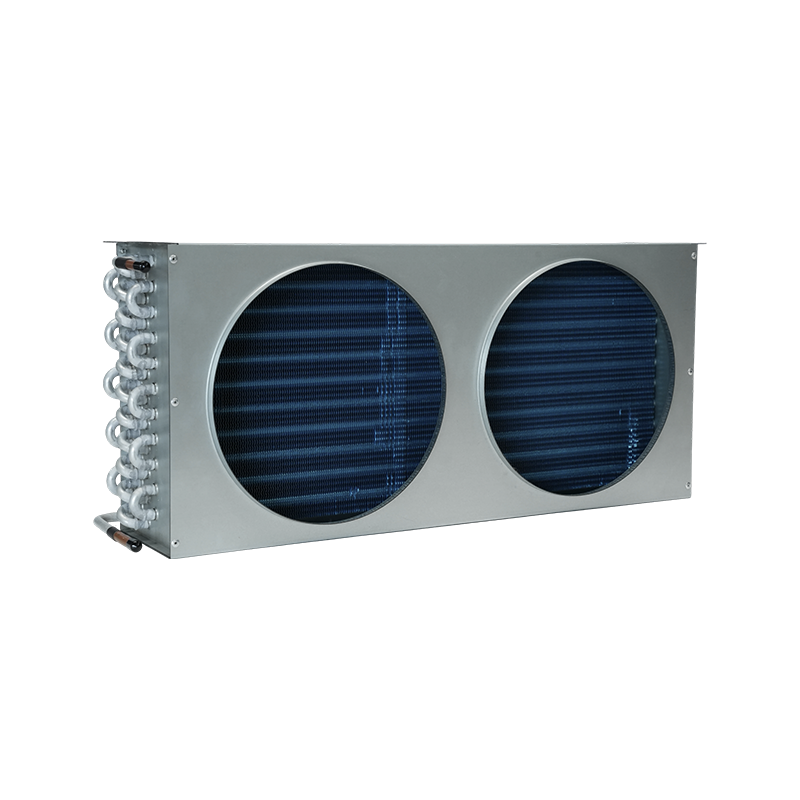
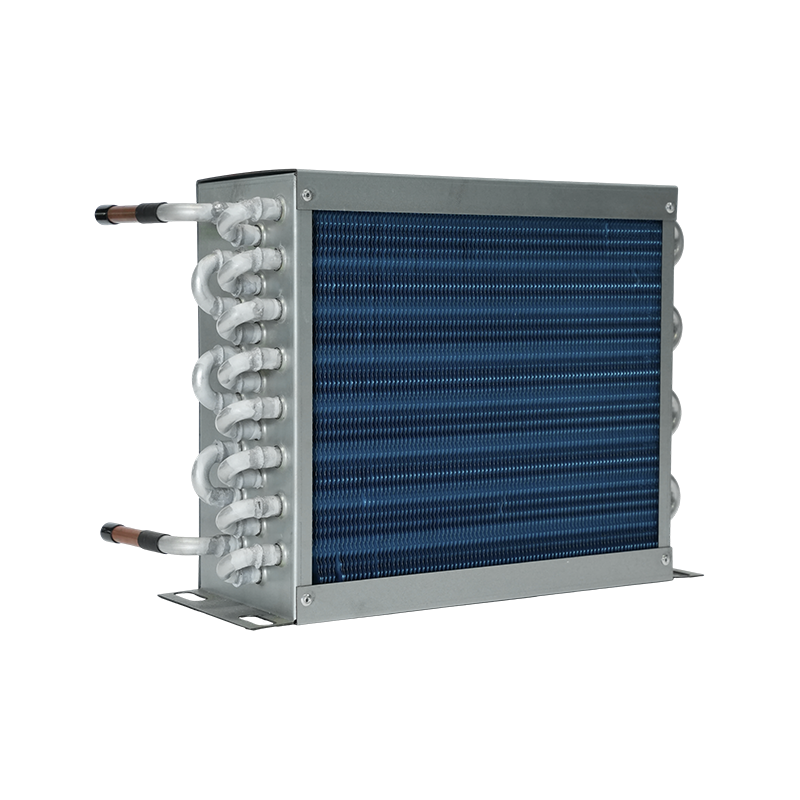 Compact All-Copper Condenser for Small Cooling SystemsCompact all-copper condenser with hydrophilic corrugated fins suits small refrigeration and HVAC systems where space, drainage, and matched heat rejection matter.View Product →
Side-by-Side Differences That Matter
| Comparison point | Compressor | Condenser |
|---|---|---|
| Primary job | Circulates refrigerant and raises pressure | Rejects heat and condenses refrigerant |
| Energy role | Main electrical load; performs shaft work | Uses fan or pump power; transfers heat |
| Moving parts | Yes: pistons, scrolls, rotors, bearings, valves | No internal moving parts; fans or pumps may move |
| Refrigerant state | Low-pressure vapor in; high-pressure hot vapor out | Hot vapor in; liquid out, with some subcooling |
| Key selection data | Capacity, refrigerant, displacement, voltage, oil, protection | Heat rejection, approach temperature, pressure drop, tube and fin material |
| Common failure modes | Valve damage, bearing wear, winding failure, oil problems | Fouling, airflow restriction, bent fins, corrosion, fan failure |
| Service checks | Amp draw, pressures, superheat, oil condition, insulation resistance | Airflow, temperature difference, subcooling, cleaning, water flow |
How the Two Parts Work Together
The compressor creates the pressure difference, and the condenser must reject heat at that pressure. The two are matched at a design point. If the condenser cannot reject enough heat, discharge pressure and temperature rise, the compressor works harder, and protection devices may trip. Oversizing a condenser is not automatically better either: it can increase refrigerant charge, cost, and fan energy, and in low-ambient operation it may require head-pressure control.
In packaged condensing units and freezer systems, the compressor and condenser are often selected as a pair rather than as separate catalogue items. The useful question is not “which part is bigger?” but “what heat rejection capacity is available at the expected ambient, refrigerant, and airflow?”
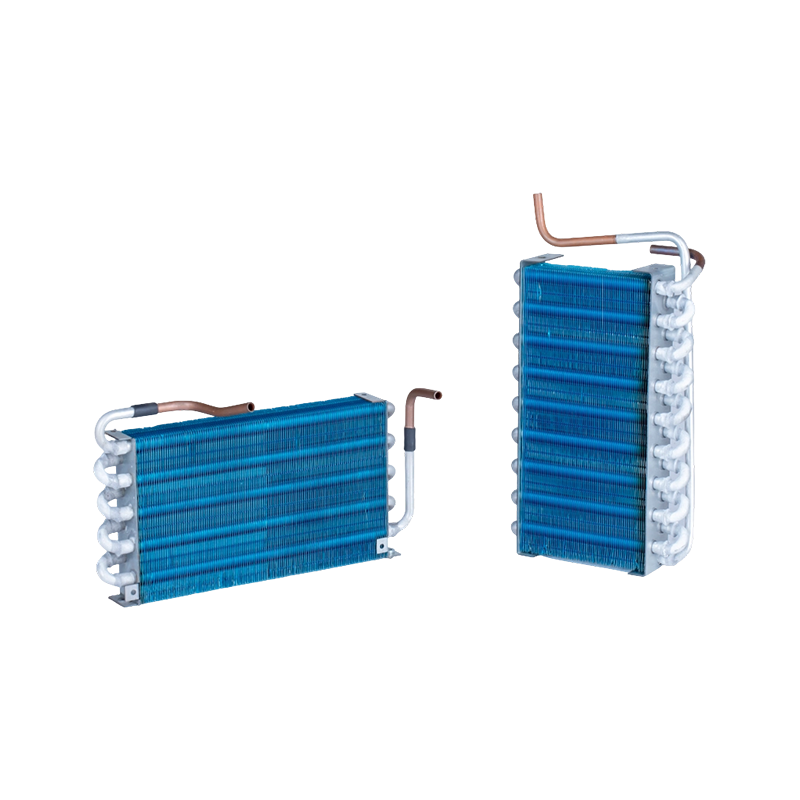
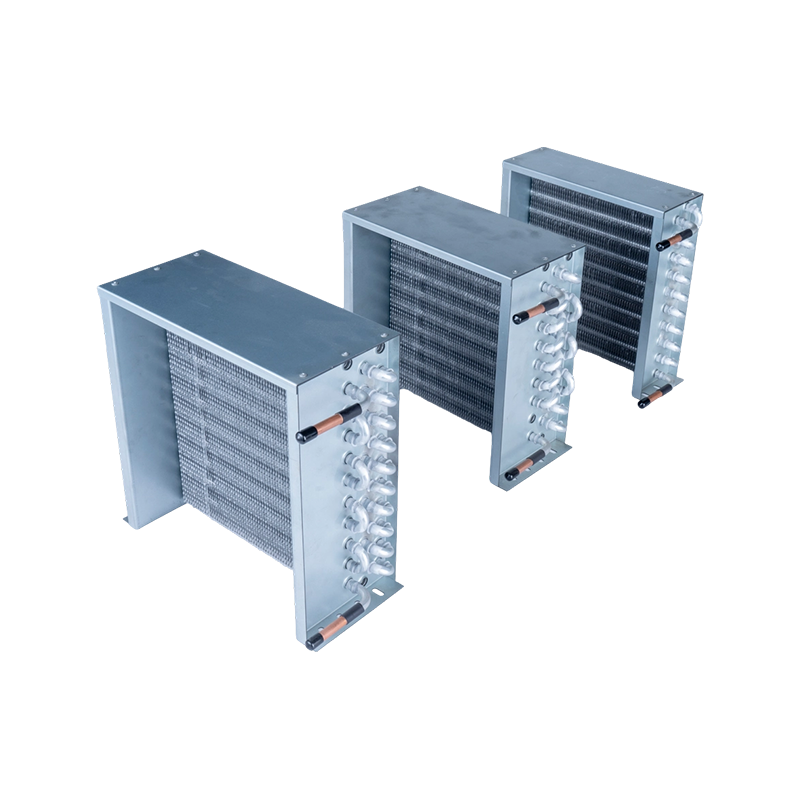 Aluminum Tube Freezer Condenser for Packaged CoolingAll-aluminum freezer condenser with corrugated foil fins and copper-aluminum piping is relevant when matching heat rejection to compressor and ambient conditions.View Product →
Efficiency, Sizing, and the Cost of a Poor Match
Compressor efficiency and condenser performance both affect system COP. A higher condensing temperature increases the compressor pressure ratio and power draw, so a condenser with a poor approach temperature can erase the benefit of an efficient compressor. Specify performance at design ambient and include a fouling allowance for real operating conditions.
Procurement risks often appear when a condenser is selected by face dimensions alone. Refrigerant pressure drop, tube pass arrangement, air pressure drop, fan power, connection sizes, and service access all affect the installed result. For OEM programs, request a heat rejection table, drawing, and test data rather than relying on a single capacity number. The HVAC heat exchanger guide is a useful starting point for comparing types and maintenance needs.
Maintenance and Troubleshooting: Compressor or Condenser?
Start with pressures and temperatures before replacing parts. High discharge pressure, high compressor current, and normal or low suction superheat usually point to condenser airflow, fouling, non-condensables, or fan failure. A compressor that trips on overload, has abnormal winding resistance, or is mechanically seized points to an electrical or mechanical fault. Low suction pressure with a normal condenser may involve charge, the metering device, the evaporator, or compressor valves.
- Clean the condenser coil and verify fan rotation, airflow, and motor current.
- Check for bent fins, blocked filters, recirculation, and dirty water circuits.
- Compare measured subcooling and approach temperature with design data.
- Check compressor voltage, capacitor, winding resistance, and oil condition.
- Do not replace a compressor because the condenser coil is blocked; correct the heat rejection problem first.
Material and Manufacturing Choices for OEM Buyers
Copper and aluminum both have a place in condenser design. Copper offers high thermal conductivity and easier brazing and repair; aluminum is lighter and can reduce material cost, but it requires compatible joining methods, corrosion control, and validation for pressure cycling. The right choice depends on refrigerant, operating pressure, corrosion exposure, service access, and production volume.
Ask for verified test data, not just brochure claims. Salt-spray hours, pressure-cycle count, burst pressure, leak rate, and the test conditions should be stated. A supplier may cite 500-hour salt spray and 50,000 pressure cycles, but the buyer should confirm sample size, acceptance criteria, and the standard used. Automotive condensers add vibration, stone impact, and road-salt exposure to the list.
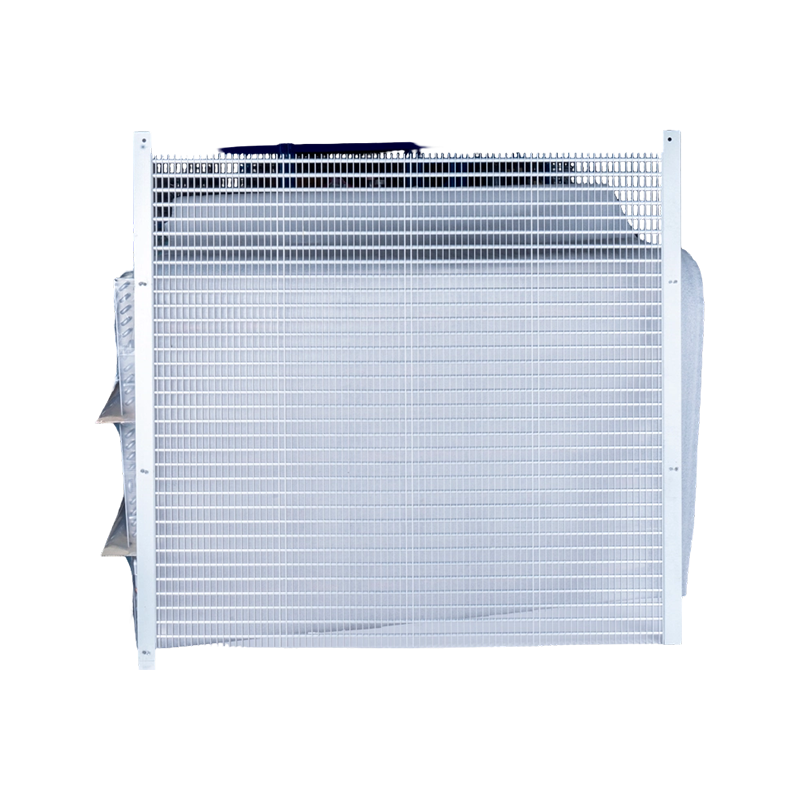
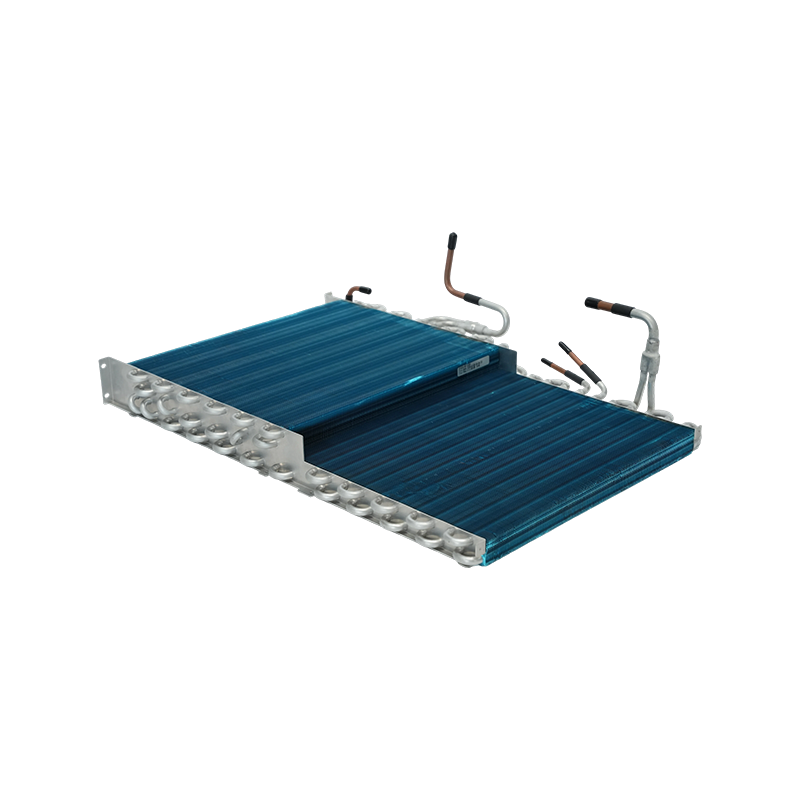
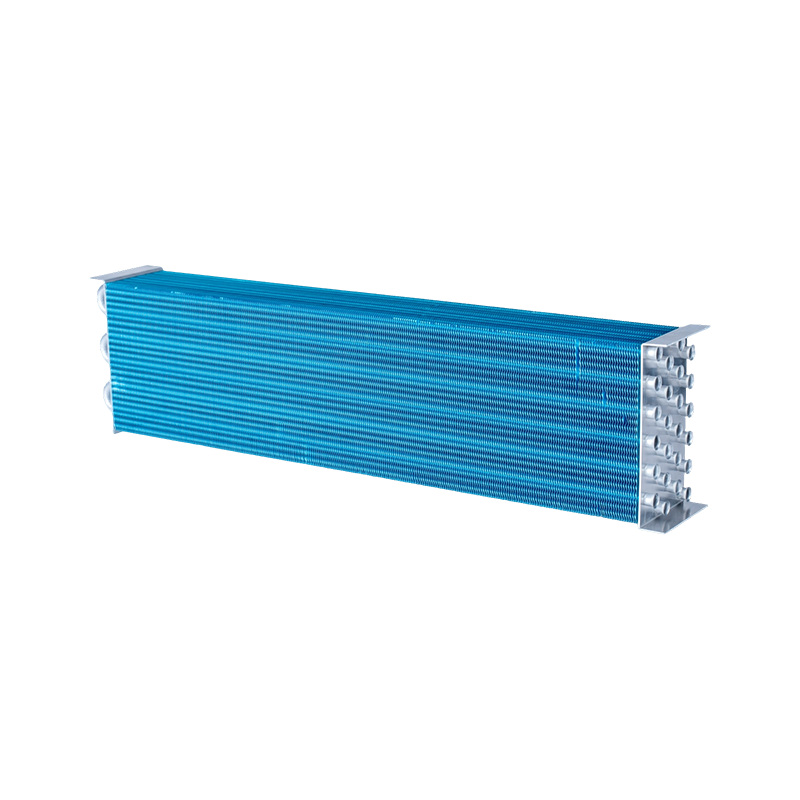 Aluminum-Tube Automotive Condenser for Vehicle CoolingAll-aluminum automotive condenser with hydrophilic corrugated fins and 720 mm core height supports lightweight vehicle cooling; request test data and samples before selection.View Product →
For custom programs, a downloadable product catalog PDF can help shortlist geometries before requesting drawings and samples.
A Practical Checklist Before You Specify or Replace Either Part
- Define the refrigerant, design ambient, and expected load profile.
- Match condenser heat rejection to compressor capacity at the design point.
- Check refrigerant pressure drop, subcooling target, and connection sizes.
- Confirm tube and fin materials, coating, and corrosion protection.
- Review salt-spray, pressure-cycle, burst, and leak-test reports.
- Plan cleaning access, fan service, and water-side maintenance.
- For OEM orders, request drawings, performance curves, and approval samples.
The difference between a compressor and a condenser is not just a definition. One adds energy to the refrigerant; the other removes heat from it. Get the match right at design, keep the condenser clean, and diagnose with pressures and temperatures before replacing parts. That approach protects compressor life and preserves system efficiency.