English
 Español
 عربى



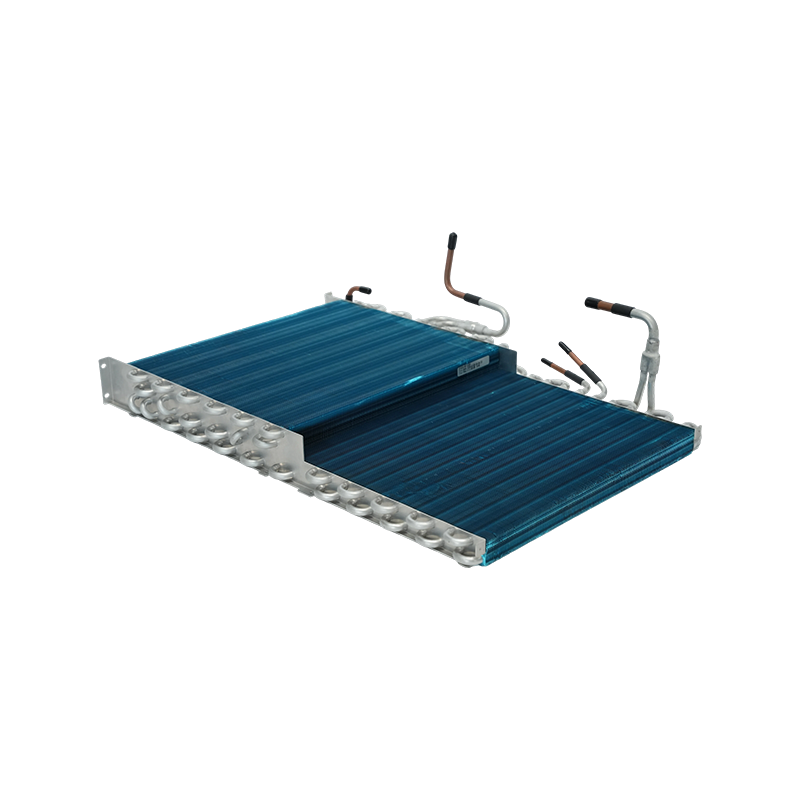
Core Dimensions: 650 (L) x 173.2 (W) x 447 (H) mm
Mold Size: 9.52 x 25 x 21.65mm
Fin Type: Plain foil corrugated fins (fin spacing 1.59 mm , fin thickness 0.15 mm)
Material: All-copper construction (2 mm aluminum plate)
The company's main products are aluminum tube type two-phase heat exchangers. Custom Thermostatic Control Cabinet Evaporator Factory.

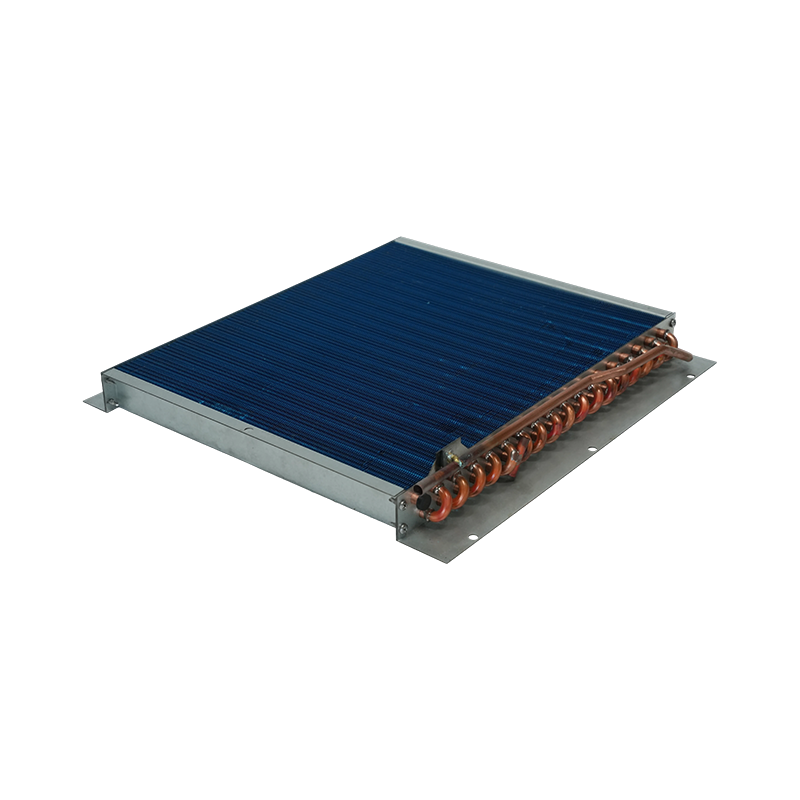
Core Dimensions: 650 (L) x 173.2 (W) x 447 (H) mm
Mold Size: 9.52 x 25 x 21.65mm
Fin Type: Plain foil corrugated fins (fin spacing 1.59 mm , fin thickness 0.15 mm)
Material: All-copper construction (2 mm aluminum plate)
The thermostatic control series for refrigerated cabinets is engineered to provide precise, reliable, and consistent cooling for environments where maintaining a steady temperature is essential.
Its core measures 650 mm in length, 173.2 mm in width, and 447 mm in height, with mold dimensions of 9.52 × 25 × 21.65 mm, offering a compact yet highly efficient design that can be seamlessly integrated into laboratory, pharmaceutical, and food storage systems.
The cabinet features corrugated foil sheets with a 1.59 mm spacing and 0.15 mm thickness, which maximize the heat transfer surface area and ensure efficient airflow and condensate drainage. The all-copper construction provides excellent thermal conductivity for rapid, uniform cooling, while the 2 mm aluminum sheet metal adds durability, structural strength, and corrosion resistance, ensuring long-term, reliable operation.
This design enables the cabinet to maintain a stable and low-fluctuation temperature, protecting sensitive products, samples, or ingredients from thermal variation.
It is ideal for applications such as laboratory incubators, pharmaceutical storage units, precision refrigeration systems, and high-quality food preservation cabinets.


On a warranty teardown, the compressor often looks like the victim: scored bearings, darkened oil, a blocked expansion valve. The filter drier is frequently the clue. This small cylinder costs little compared with the repair, yet it decides whether moisture, acid, and metal particles reach the comp...
READ MOREA technician arrives at a site where the supply air is warm, the compressor runs continuously, and someone has already added refrigerant. The real problem is often not charge level but the evaporator: a coil that is starved, flooded, fouled, badly matched to airflow, or corroded enough to lose heat...
READ MOREA technician reads 410 psi discharge pressure on an R-410A system, finds a condenser coil packed with lint, and still hears the customer say, “The compressor is bad.” That misdiagnosis is common because both parts sit at the center of the refrigeration cycle and both affect pressure, temperature, a...
READ MOREThermostatic control cabinet evaporators are designed for equipment that requires precise temperature regulation and reliable heat removal. In industrial automation systems, electrical control cabinets, communication equipment, and specialized cooling units, temperature fluctuations can directly influence component performance and service life. Therefore, evaporator design needs to balance cooling efficiency, structural reliability, and accurate temperature control.
Hangzhou Yijie Refrigeration Technology Co., Ltd. has 12 years of deep expertise in heat exchangers and holds multiple core technologies. By adopting high-performance aluminum tube technology, the company breaks through the limitations of traditional copper materials. This advanced approach reduces material costs by more than 30% while providing significant advantages in mass production. Its Thermostatic control cabinet evaporators are developed with a focus on stable heat exchange performance, durability, and customized application requirements.
Maintaining a stable internal cabinet temperature requires more than simply increasing cooling capacity. An effective thermostatic control cabinet evaporator must work together with temperature sensors, control systems, airflow structures, and refrigeration components to create a balanced cooling environment.
Material selection has a direct influence on evaporator manufacturing cost, weight, corrosion resistance, and production efficiency. While copper materials have traditionally been used in many heat exchanger products, high-performance aluminum tube technology provides an alternative solution that meets the growing demand for lightweight and cost-efficient cooling equipment.
Hangzhou Yijie Refrigeration Technology Co., Ltd. utilizes aluminum tube technology to improve production flexibility and product competitiveness. The company’s heat exchanger products have passed 500-hour standard salt spray tests and 50,000 pressure cycle verification. These testing results demonstrate corrosion resistance and compressive strength that far exceed national standards, supporting reliable operation in various industrial environments.
| Technical Aspect | Aluminum Tube Technology Advantage |
| Material Cost | Reduces material costs by more than 30% compared with traditional solutions |
| Manufacturing Efficiency | Provides advantages for large-scale production and consistent quality control |
| Durability | Offers strong corrosion resistance and pressure endurance |
Different industries have different requirements for thermostatic control cabinet evaporators. Equipment installed in factories, warehouses, machine rooms, or outdoor environments may face challenges such as humidity, dust, continuous operation, and temperature changes. Customized evaporator solutions help ensure stable cooling performance under these conditions.
With strong custom service capabilities, Hangzhou Yijie Refrigeration Technology Co., Ltd. provides heat exchanger solutions for various fields, including household AC, automotive AC, dehumidifiers, cold chain systems, eco-friendly equipment, machine rooms, and warehouses. This broad application experience allows the company to develop evaporators according to different environmental and operational requirements.
A customized thermostatic control cabinet evaporator can provide better compatibility with specific equipment structures and cooling requirements. During product development, manufacturers need to evaluate cabinet dimensions, heat generation levels, installation space, refrigerant characteristics, and operating conditions.
For thermostatic control cabinet evaporators, quality verification is essential because these components often operate continuously in critical equipment. Performance failures may lead to overheating, reduced equipment efficiency, or increased maintenance requirements.
Hangzhou Yijie Refrigeration Technology Co., Ltd. applies strict testing standards to ensure product reliability. Through 500-hour standard salt spray testing and 50,000 pressure cycle verification, its heat exchanger products demonstrate excellent resistance against corrosion and mechanical stress. These quality advantages support stable operation in demanding cooling applications.
| Verification Item | Performance Purpose |
| Salt Spray Test | Evaluates corrosion resistance in humid and challenging environments |
| Pressure Cycle Verification | Confirms structural strength under repeated operating pressure changes |
| Production Inspection | Ensures consistent quality during mass manufacturing |
As industrial equipment becomes more intelligent and compact, thermostatic control cabinet evaporators are expected to provide higher efficiency with smaller installation footprints. Lightweight materials, customized structures, and improved durability are becoming important development directions for modern cooling systems.
By combining 12 years of heat exchanger expertise, advanced aluminum tube technology, and customized service capabilities, Hangzhou Yijie Refrigeration Technology Co., Ltd. continues to provide reliable evaporator solutions for diverse applications. Its products help equipment manufacturers achieve better temperature control, improved energy efficiency, and long-term operational stability.
 Thermostatic Control Cabinet Evaporator Manufacturers