gracezhang@yijiecool.com |
 English
 Español
 عربى



Cooling Load Explained: Why Sensible and Latent Heat Both Matter in Sizing
Content
A facility manager replaces a failed rooftop unit in a 1,800 sq ft office with the same nominal capacity as the old unit. The space reaches 74°F on a design day, but occupants still complain about a clammy feel and uneven temperatures. The equipment may not be defective; the replacement was likely sized from floor area and nameplate capacity, while the real cooling load depends on solar gain, occupancy, ventilation, envelope performance, and moisture removal. Calculate the load before selecting equipment, then verify the coil can handle both sensible and latent heat at design conditions.
Cooling load is the rate at which heat must be removed to maintain the required indoor temperature and humidity. It is usually stated in Btu/h or kW. It is not connected load, the total electrical demand of installed equipment, and it is not the nominal tonnage on a condenser. A load calculation adds external gains such as solar radiation and conduction through walls, roof, and glass to internal gains from people, lighting, and appliances, then adds heat from ventilation and infiltration. It separates sensible load, which changes air temperature, from latent load, which changes moisture content. Space load and coil load are related but not identical: the coil must also handle outdoor-air load, duct gains, and fan heat.
What Cooling Load Actually Measures
Use design conditions, not a single outdoor temperature. A dry 95°F day and a humid 88°F day can produce different coil duties. The calculation should document indoor dry-bulb and humidity targets, outdoor design dry-bulb and wet-bulb, occupancy, ventilation rates, envelope U-values, solar exposure, and internal equipment loads. Room-by-room results show which zones drive the block load and where airflow may be constrained. A total load without assumptions is difficult to review and easy to distort with an unexplained safety factor.
Why the Square-Footage Rule Misses the Mark
The common shortcut of one ton per 400 sq ft is fragile. A west-facing conference room with floor-to-ceiling glass, 20 occupants, and dedicated outdoor air can have a higher load per square foot than an insulated warehouse with low occupancy. The rule also hides latent load. Oversizing to cover uncertainty often causes short cycling, poor moisture removal, and wider temperature swings; undersizing leaves the space unable to hold setpoint at design conditions. Both outcomes affect energy use, control stability, and equipment life.
The Inputs That Move the Number
The number moves when any design assumption moves. Review the inputs rather than accepting a single total.
| Input | What it changes | Why it matters |
|---|---|---|
| Outdoor design temperature and humidity | Conduction, ventilation, and latent load | A dry 95°F day and a humid 88°F day can require different coil capacity. |
| Solar gain and orientation | Radiant gain through glass and surfaces | West and south exposures may peak at different hours. |
| Envelope U-values and airtightness | Conduction and infiltration | Poor airtightness adds both sensible and latent load. |
| Internal gains | People, lighting, and equipment | Occupancy density affects ventilation and latent load. |
| Ventilation and outdoor-air fraction | Outside-air load | Required outdoor air can dominate a small, high-occupancy space. |
| Duct location and leakage | Supply gains or losses | Ducts in unconditioned attics add load at the coil. |
A calculation that ignores humidity or duct location is incomplete for comfort cooling. Use coincident design conditions and record each assumption.
Sensible, Latent, and the Coil Load
Air at 72°F can feel wrong if the dew point is high. Sensible capacity lowers temperature; latent capacity removes moisture. A coil needs enough surface area, refrigerant temperature difference, and condensate management to meet both targets. Selection involves apparatus dew point, bypass factor, airflow, and refrigerant properties. If the coil is chosen only for sensible capacity, the space may reach setpoint while humidity stays elevated. Report sensible and latent components separately, and compare capacities at actual entering-air conditions rather than nominal ratings. In humid climates, latent capacity often decides whether the system feels comfortable.
From Load to Equipment and Heat Exchanger Selection
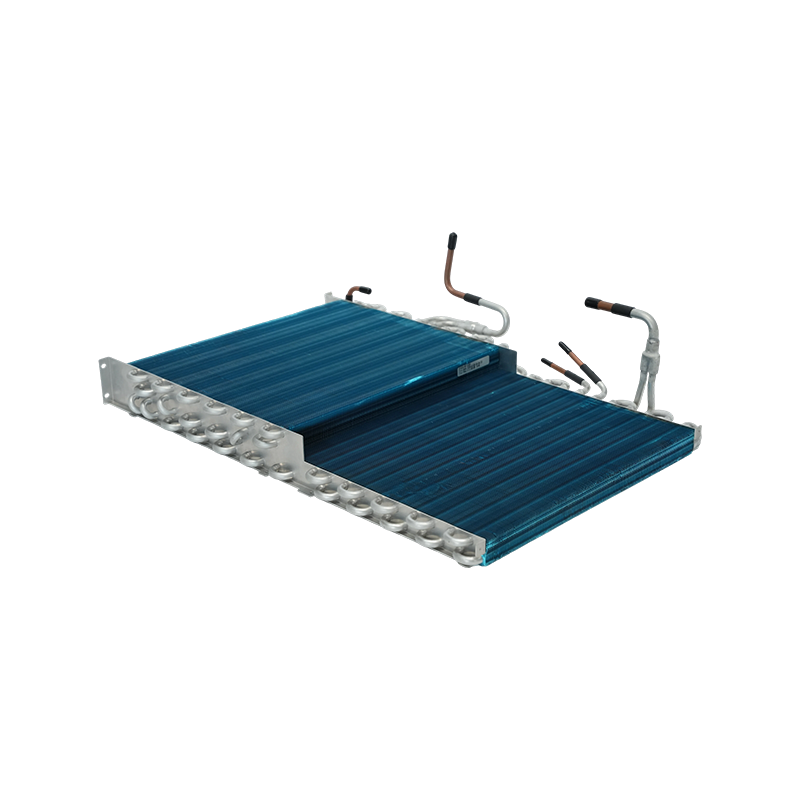
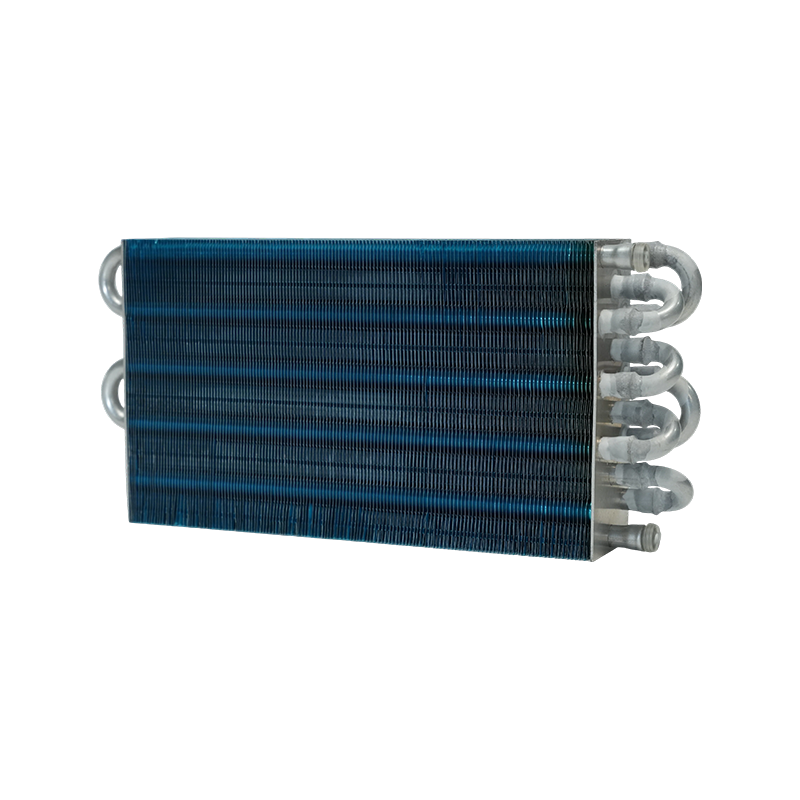
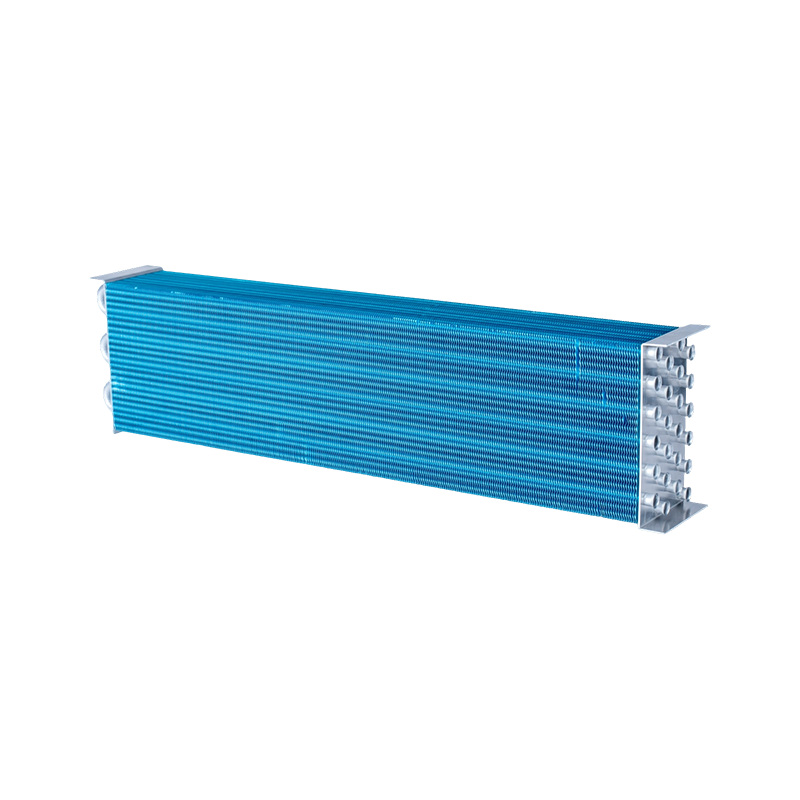
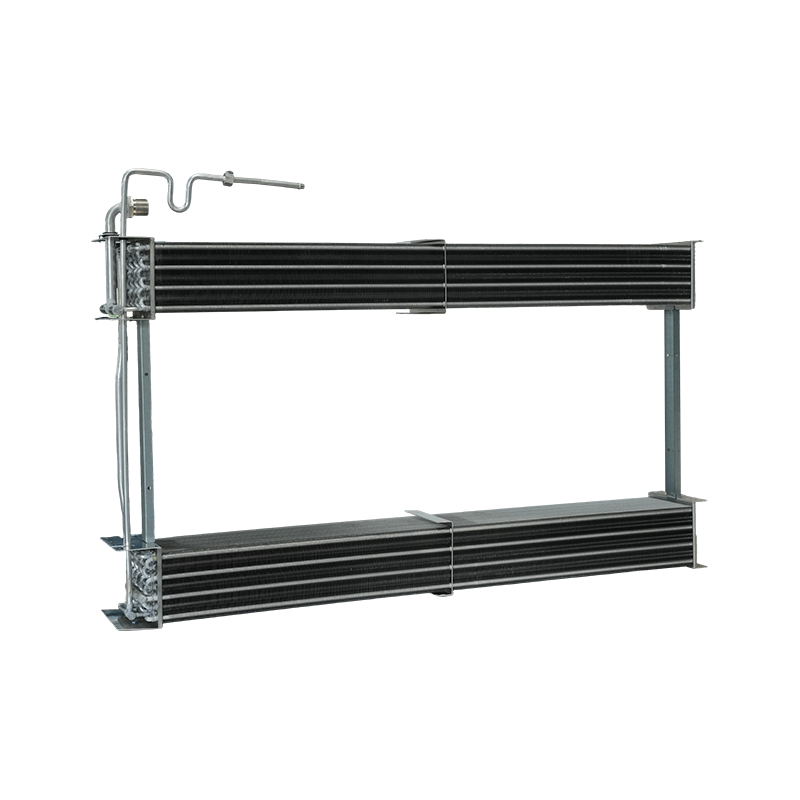
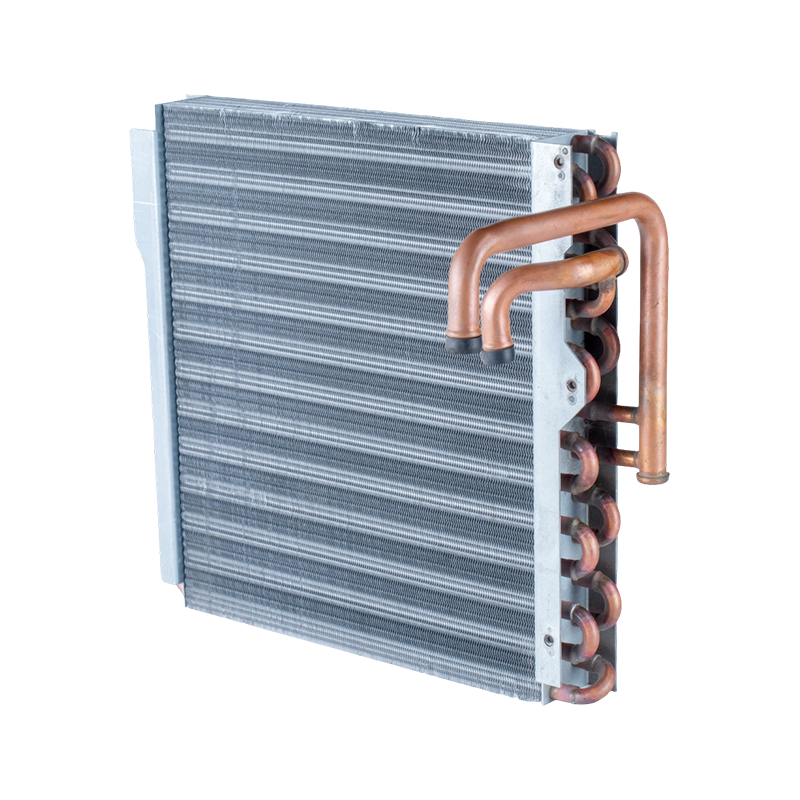
Once the load is known, selection can follow a defensible sequence: room-by-room loads, block load, outdoor-air requirements, airflow limits, coil performance, and control strategy. Equipment must match the load at design conditions, not merely fit the electrical service or existing curb. Airflow matters as much as nominal capacity; too little can freeze a coil, too much can reduce latent removal. Refrigerant, tube material, fin geometry, circuiting, and pressure drop all influence whether the heat exchanger delivers the calculated duty. An HVAC heat exchanger guide helps teams compare evaporator and condenser roles before the procurement package is fixed.
In residential and light-commercial work, the load is often paired with a matched air-source heat pump or condensing unit. Defrost behavior, coil face velocity, and cabinet space still need checking.
For larger systems, zone-level loads and part-load performance matter as much as the block total. A central air handler or remote condenser with multiple evaporators must be selected against actual entering conditions, piping or duct pressure budgets, and defrost or condensate requirements.
Space constraints may push teams toward compact condensers or replacement coils that fit an existing cabinet. Compactness is useful only if the heat exchanger still meets capacity at design airflow and pressure drop. Check subcooling, approach temperature, and fan power before accepting a tight package.
Yijie describes its core products as aluminum-tube two-phase heat exchangers for OEM and custom applications. The company says its aluminum-tube approach reduces material cost by more than 30% versus copper and that products have passed 500-hour salt spray and 50,000 pressure-cycle testing. Those are company claims, not independent certifications, so buyers should request test reports, drawings, and performance data for the specific model. Material substitution changes corrosion behavior, joining methods, and repairability; the load calculation does not answer those questions.
Procurement and Retrofit Risks
Procurement risk often starts with a thin specification. An RFQ that lists only floor area, refrigerant, and connection size leaves the supplier to guess at outdoor-air load, entering wet-bulb, allowable pressure drop, and fouling margin. A better package includes room-by-room loads, design temperatures, airflow, allowable sound, electrical data, and expected part-load profile. State whether the coil duty includes duct gains and fan heat. Without those boundaries, two quotations can look comparable while using different assumptions. During a retrofit, existing ducts and curb dimensions may constrain the replacement more than nominal tonnage. Verify static pressure, coil face area, and condensate drainage before approving the submittal. Yijie's product catalog offers a structured starting point for component review, but it does not replace a project-specific load calculation.
A Practical Review Checklist
Use this checklist before releasing an equipment package:
- Confirm the cooling load is calculated at coincident design dry-bulb and humidity conditions.
- Check sensible and latent loads separately, including outdoor air and duct gains.
- Compare equipment capacity at actual entering-air conditions, not only nominal tonnage.
- Verify airflow, external static pressure, and coil pressure drop against the selected components.
- Review material, corrosion protection, and test reports for the specific heat exchanger.
- Record assumptions so a later retrofit does not inherit an unexplained safety factor.
A cooling load is a design tool, not a paperwork formality. Built from the right inputs, it makes equipment selection traceable; replaced by a square-footage shortcut, it designs comfort problems in before the first unit ships.